

Services
Utilities & Installations in Tenerife
Utilities and installations are the hidden part that determines how long a renovation lasts: electrical, plumbing, waterproofing, and windows.
It makes sense to inspect and upgrade them while the site is open. Reopening a freshly finished wall costs far more than doing it at the right time.
Services in this category
Work in this category
When it is needed
- Old electrical panel or too few sockets for modern use.
- Windows that let in noise, dust, or rainwater when it's windy.
- Terraces and flat roofs with water leaks into the home.
- You are already renovating and want to renew what remains hidden.
How we work
- 1Checking the existing setup before proposing changes.
- 2Work done on an open site, before tiling and painting.
- 3Operational testing before closing chases and false ceilings.
- 4Finishing the walls only after thorough checks.
Electrical installations designed for everyday use
The position of the bed, kitchen units and desk determines where sockets are needed. Before chasing the walls, we mark sockets, switches and lighting points with that layout in mind: a socket hidden behind a wardrobe is of little use.
For electrical installations, the consumer unit, protective devices and circuits are assessed against the equipment planned. Replacing visible fittings is not enough if damaged connections or circuits unsuitable for the intended use remain behind them.
Consumer unit, circuits and lighting
We define which circuits will stay, which will be renewed and how they will be labelled at the consumer unit. Lighting plans also establish where each area is switched on, so you do not have to cross a dark room.
Spotlights and integrated lighting are planned alongside the suspended ceiling and furniture. Connections that need maintenance should remain accessible rather than being sealed behind a fixed finish.

Plumbing and replacement of old pipework
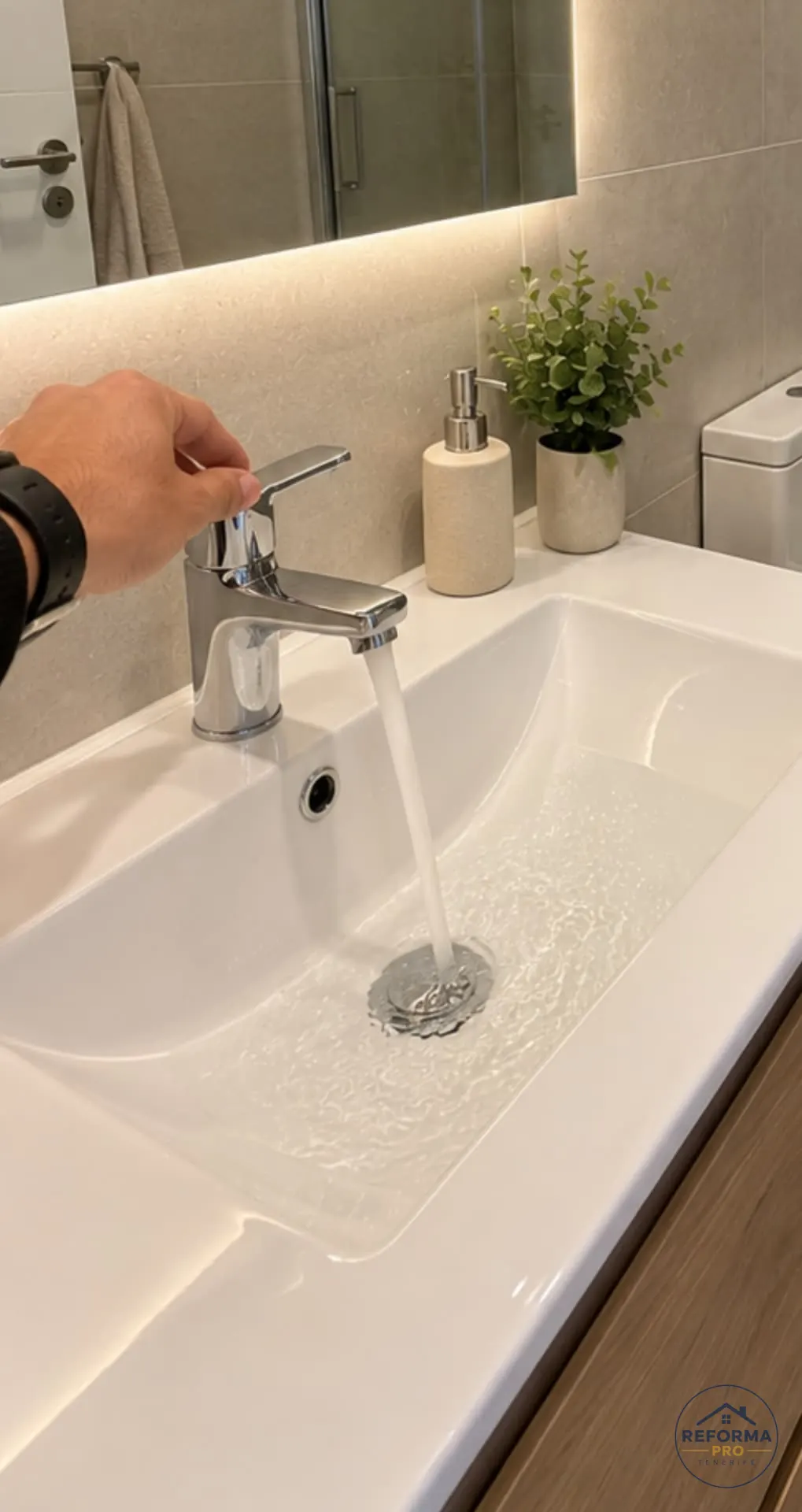
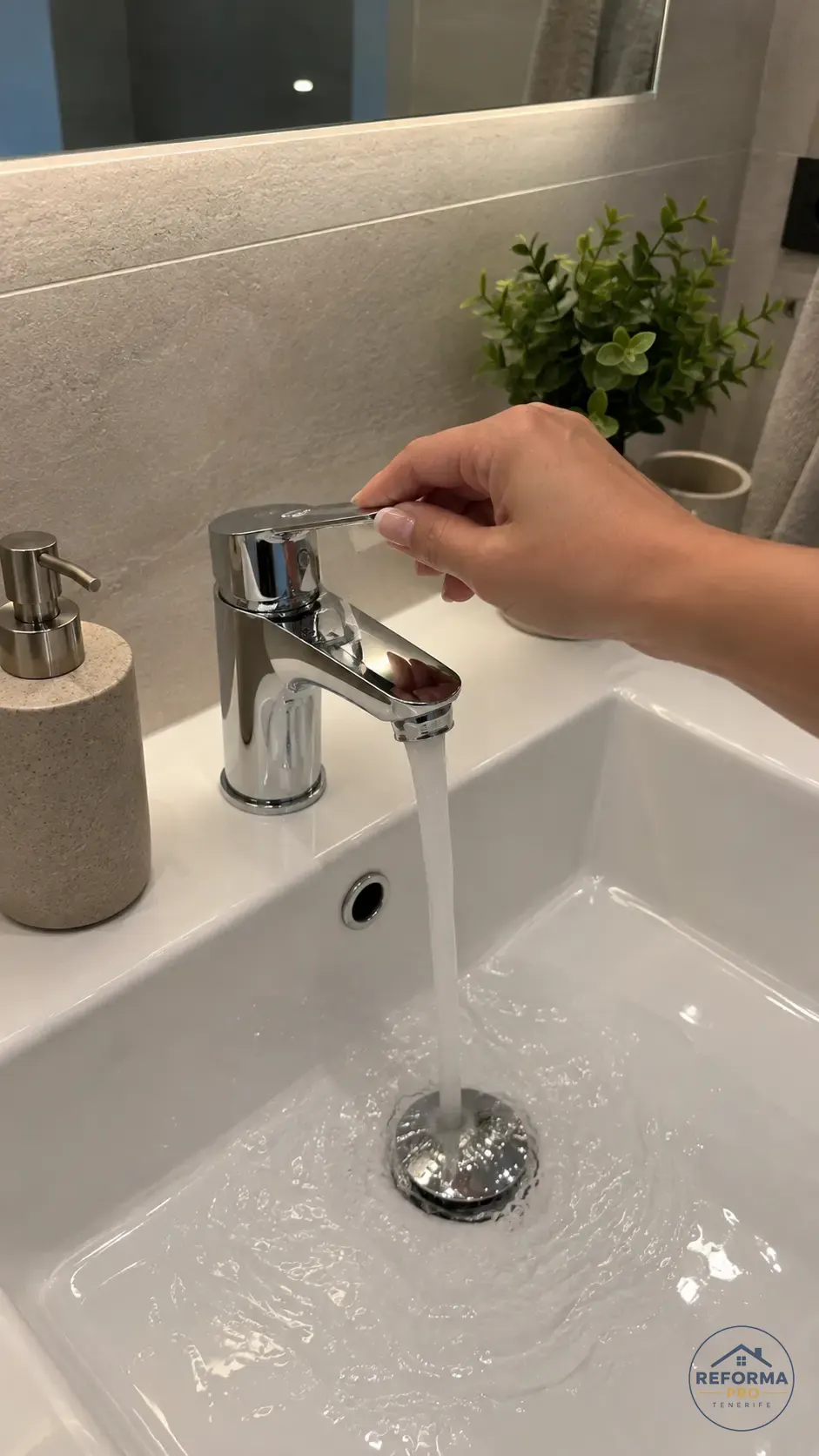
Reduced flow does not always mean low pressure throughout the building. There may be a partially blocked valve, an obstructed section or internal corrosion. With plumbing work, it is important to locate the cause before deciding how much to replace.
Buildings from the 1970s and 1980s may still have iron or galvanised steel pipes. If they have repeated leaks or internal narrowing, one patch after another leaves other weak points unresolved. Replacing a continuous run is considered, while keeping isolation valves accessible.
Materials and joints that allow future maintenance
The choice of new pipework depends on the route, existing connections and use. Improvised joints between incompatible materials are avoided, and pipes are secured so they do not move when taps are opened. The specific material is detailed in the quote.
Drainage: routes, falls and access
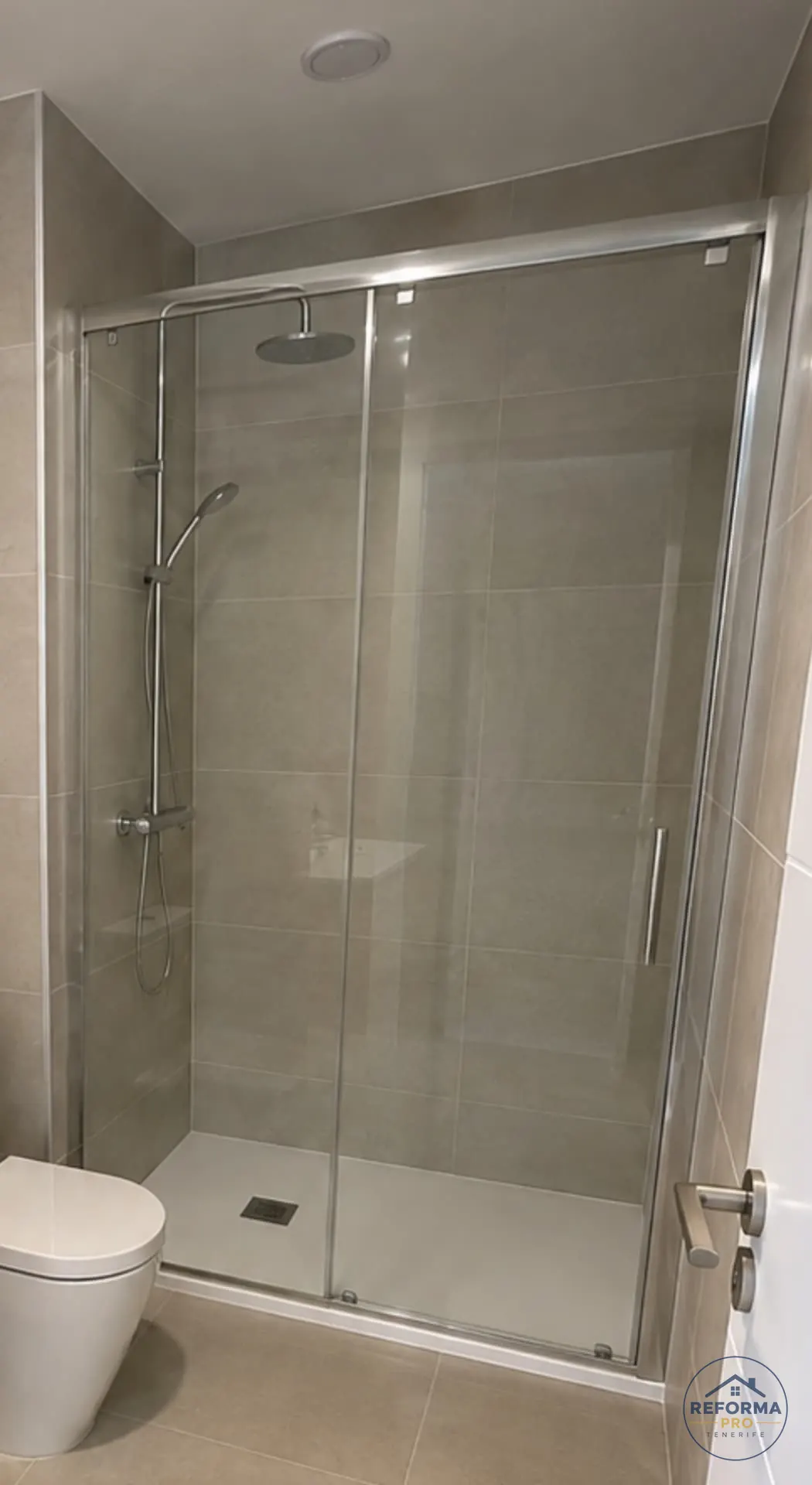
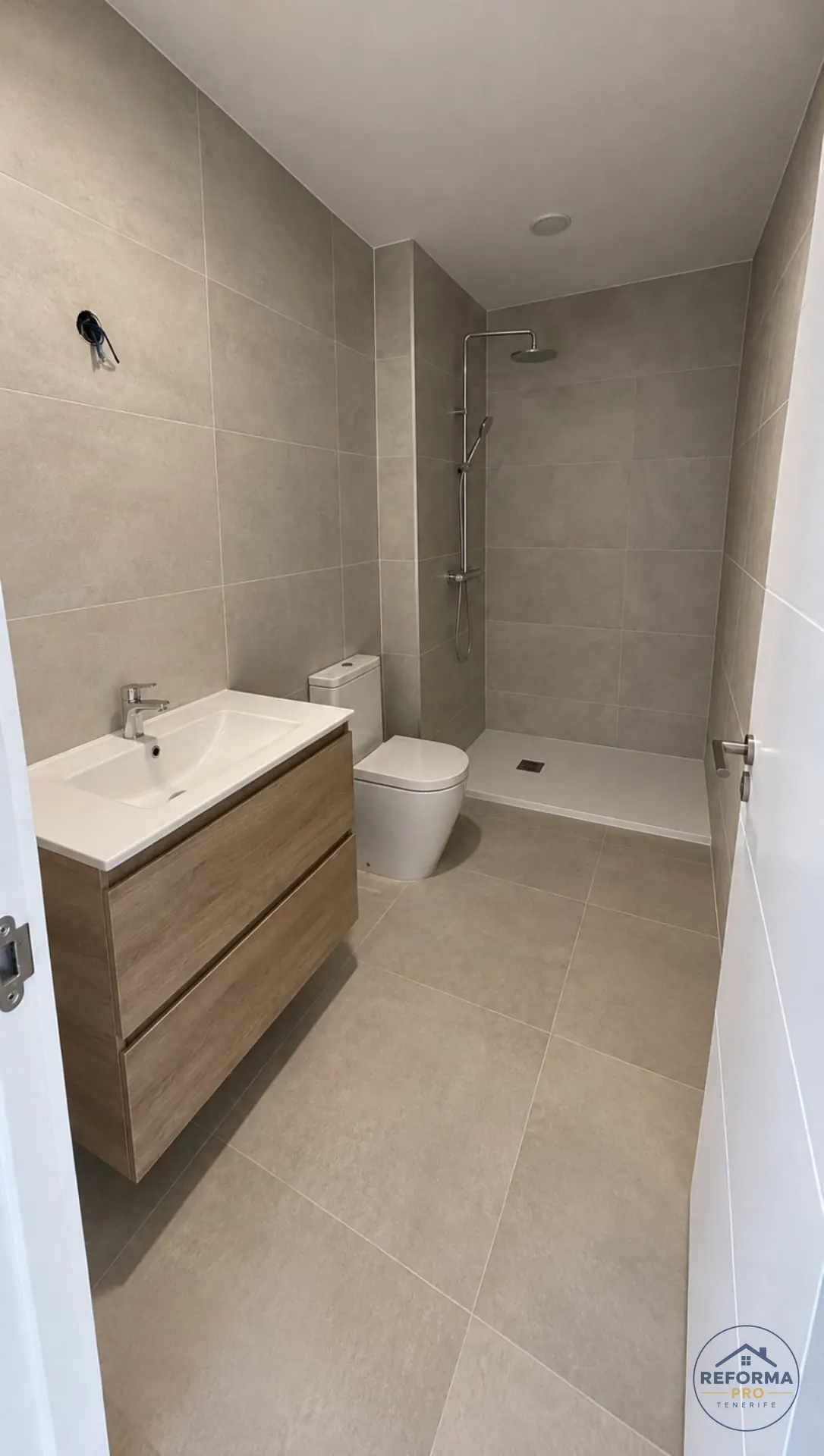
Moving a basin or shower means assessing its drainage route. The available height and position of the soil stack determine the fall; a layout should not be promised without checking them. Pipe diameters, traps and junctions are also checked to prevent bad smells and slow drainage.
When replacing a bath with a shower tray, the drain level is checked before choosing the finished height. In a shared building, work on a communal soil stack requires prior coordination: a repair inside a bathroom does not give you free rein to alter a shared element.
Doors and windows: measure the junctions too
When replacing doors and windows, we measure the opening and check the frame's supporting surface. A new window will not stop water ingress if its junction with the façade is poorly sealed. Near the sea, salt exposure matters when choosing hardware and finishes.
Internal doors are coordinated with the finished floor thickness to allow the right clearances and opening movement. For external windows, the requirements of the owners’ association and local council are checked beforehand if the appearance of the façade will change.

Waterproofing bathrooms, terraces and roofs
A stain alone does not identify where water is getting in. Before proposing waterproofing, it is necessary to distinguish between water ingress, a plumbing leak and condensation. The guide to damp in northern and southern Tenerife explains why they cannot all be treated in the same way.
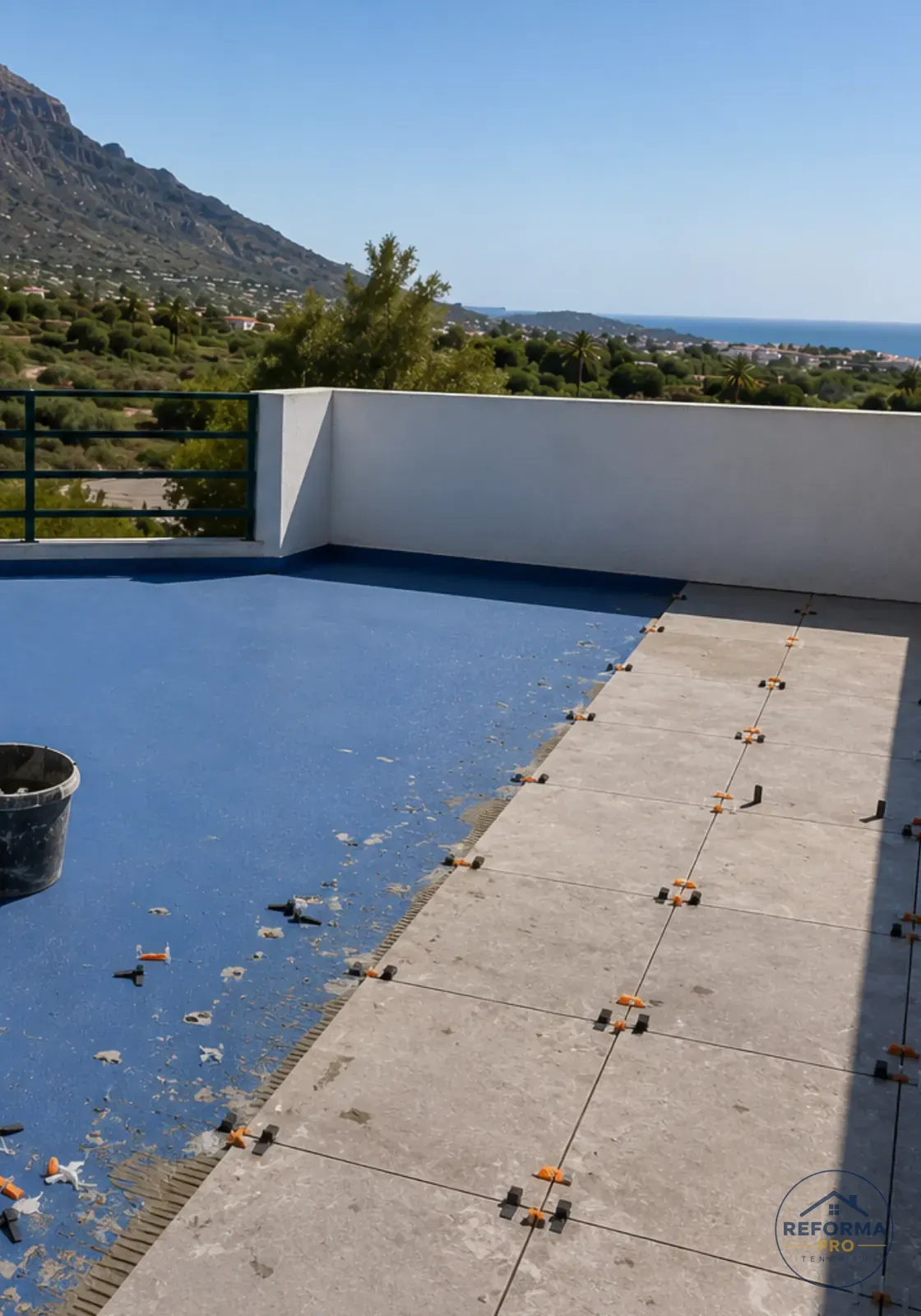
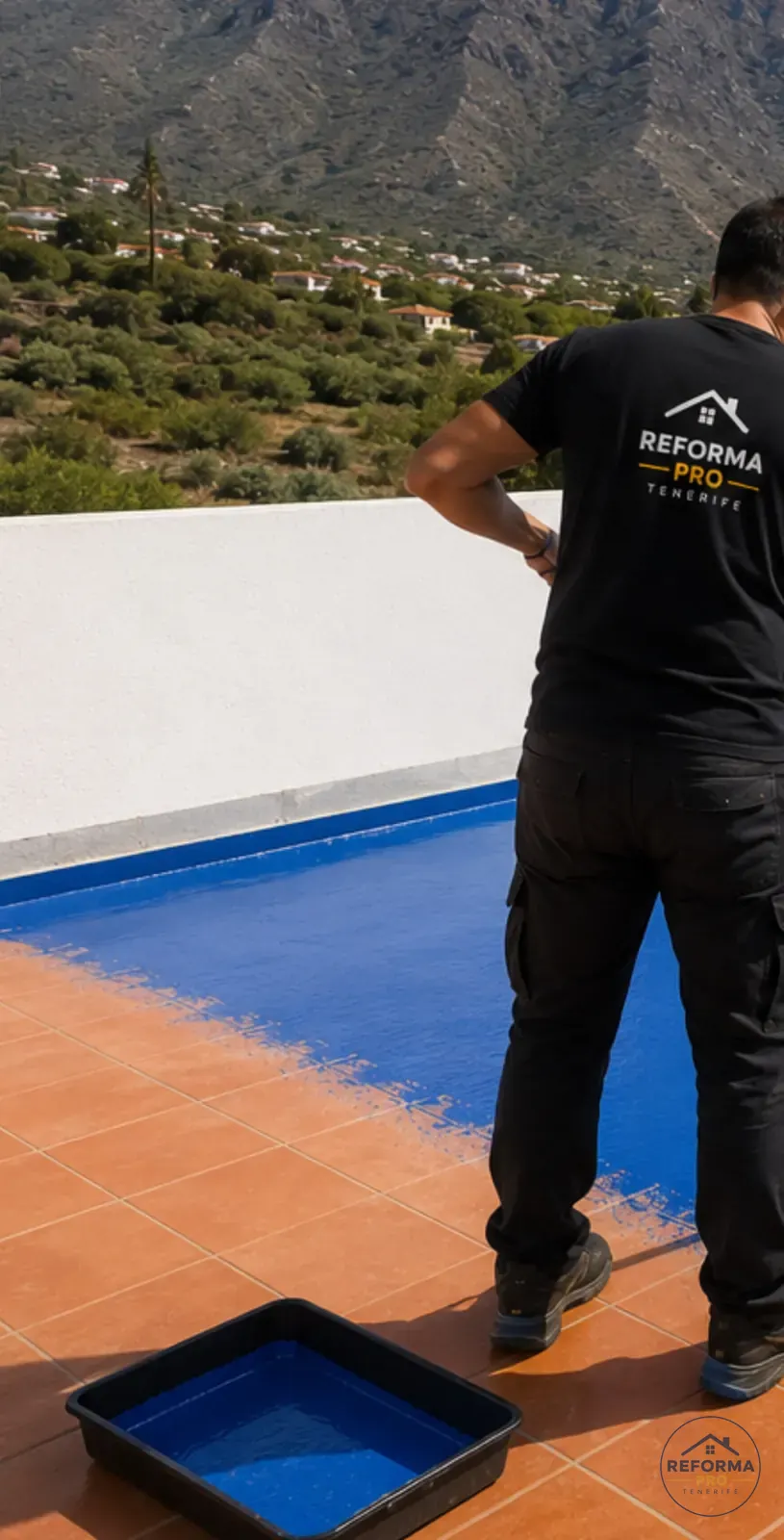
In bathrooms, continuity beneath the finish and junctions at the shower tray, corners and pipe penetrations matter. On terraces, falls, outlets and parapets are checked: covering only the area where the stain appears can leave the real entry point open.
Roofs with a two-layer bituminous membrane
Two-layer roof waterproofing uses two layers of bituminous membrane. Substrate preparation, overlaps and detailing at outlets and vertical elements are just as important as the main surface. The system and its protection are chosen to suit the substrate and how the roof is used.
Exposure and maintenance in Tenerife
In the north, damp spells make some substrates harder to dry; in coastal areas, wind exposure also matters. You can consult the pages on waterproofing in Puerto de la Cruz and Costa Adeje. For walkable surfaces, the terrace waterproofing guide covers junctions with the flooring in more detail.
Signs that older installations need checking
- Sockets that heat up, a burning smell or protective devices that trip repeatedly: stop using the affected point and request an inspection; do not try to solve it by increasing the protection rating.
- Discoloured water after periods without use, recurring leaks or different flow rates between taps: valves and pipework should be checked.
- Gurgling and persistent smells: check traps, drainage and the connection to the soil stack rather than simply masking bathroom odours.
- Stains that reappear after rain: record when and where they occur to help locate the water entry point.
Coordinating renovation work and checks before closing up
In a full renovation, routes are agreed before partitions are built or ceilings installed. This avoids clashes that would later require changes to lighting, furniture or shower height. Any documentation required by regulations is checked case by case during the site visit.
What to check while walls and ceilings are open
- Pressure-test renewed pipework and inspect joints before covering them.
- Check the circuits worked on, their protective devices and the operation of sockets, switches and lighting points.
- Test drainage and observe accessible junctions for leaks.
- Photograph routes, with position references, before closing wall chases and ceilings: this helps avoid drilling into pipes or cables later.

Indicative prices and factors that affect the quote
These figures are indicative and exclude IGIC; the final price is set out in writing after the free site visit. Materials and scope are detailed in the quote. The renovation prices page lets you compare items. Narrow access, removing finishes and reinstating them also affect the cost; a rate per square metre does not replace measurement. For a complete bathroom, see how much a bathroom renovation costs.
- Electrical work: 35 – 70 €/m²; circuits, planned points and ease of routing cables affect the cost.
- Plumbing: 900 – 3,000 €; the length of runs and connections needing renewal matter.
- Doors: 120 – 450 € each. Windows: 350 – 1,200 € each. Dimensions, opening type and the condition of the opening affect the item cost.
- Waterproofing: 30 – 70 €/m². For a two-layer membrane, the reference is approx. 100 €/m², with materials and installation; additional work is detailed in writing.
From diagnosis to finishes, with direct contact
The site visit allows us to measure, check access and separate essential work from optional improvements. We then provide a written, itemised quote, agree the order of work and coordinate supply interruptions and the building's permitted working hours. Each local council has its own procedure for any necessary formalities.
We are an Italian team based in Puertito de Güímar, working across the island without intermediaries. Hiring Reforma Pro Tenerife directly means discussing the work with personal attention, seeing photos of our own projects and agreeing how walls, ceilings and junctions will be finished.
If you live abroad, we provide progress updates with photos via WhatsApp. For holiday apartments in the south, booking dates should be shared before work is organised. You can start with an indicative AI quote and then confirm the scope during the free site visit.
Frequently asked questions
Does the entire electrical system have to be replaced during a renovation?
Not always. It depends on the condition of the distribution board and existing circuits: we check first, then propose only what is truly necessary.
Can you replace just the windows?
Yes, this work can be requested individually, without renovating the rest of the home.
Can I keep using water and electricity during the work?
It depends on the sections being worked on and how they can be isolated. Necessary interruptions are agreed before work starts. If shared services are affected, these are coordinated with the owners’ association; do not count on a continuous supply without having the installation checked first.
Does reduced flow mean all the pipes need replacing?
No. First, we check whether it affects one tap, one section or the whole home. A localised blockage may need a different approach from an old network with widespread corrosion.
Can access panels be left instead of covering everything up?
Yes, wherever they are needed to maintain valves or connections. Their position is agreed alongside the layout and finishes so they remain accessible without dismantling fixed furniture or breaking finishes.
Is sealing the joints enough if water is coming through the terrace?
Only if that is genuinely where the problem lies. Falls, outlets and junctions are checked first. Regrouting the flooring is not the same as renewing damaged waterproofing beneath the tiles.
What should I prepare for the site visit if I do not live in the property yet?
Arrange access and provide photos of the damage and any available plans. Indicate where the main furniture and equipment will go. If possible, find out about isolation valves and the building's rules for renovation work.
Does the quote cover reinstating paintwork and tiles?
This should be specified in separate items, together with the areas affected. If matching tiles are unavailable, the finish is agreed before opening up rather than assuming the patch will be invisible.