

Services
Flooring and wall tiling in Tenerife
The success of a floor depends less on the material and more on the subfloor: if the surface isn't clean and level, even the most expensive tile will look bad.
That is why we always keep two things separate: preparing the base and laying the material. One is never rushed at the expense of the other.
Services in this category
Work in this category
When it makes sense
- Old, scratched flooring or loose tiles.
- Dark grout lines that can no longer be cleaned.
- You want continuous flooring throughout the entire home.
- Walls to be tiled or clad in the kitchen, bathroom, or outdoor area.
How it is done
- 1Checking the condition and level of the subfloor.
- 2Removing the old material or preparing to lay over it, whenever possible.
- 3Planning the layout so cuts fall in less visible areas.
- 4Laying, grouting the joints, and final cleaning.
Ceramic flooring: versatility for everyday use
We install ceramic flooring to give rooms a practical, easy-care finish. Performance varies within the ceramic family: here we distinguish non-porcelain ceramic tiles from porcelain stoneware. Not every tile is suitable for walking on; we check that it is intended for floors and the expected foot traffic.
Its strengths are the range of designs and sizes and straightforward daily cleaning. It suits kitchens, hallways and other indoor areas. For bathrooms or terraces in Tenerife, the product’s behaviour when wet and suitability for outdoor use need checking: appearance alone is not enough.
Preparation, installation and maintenance
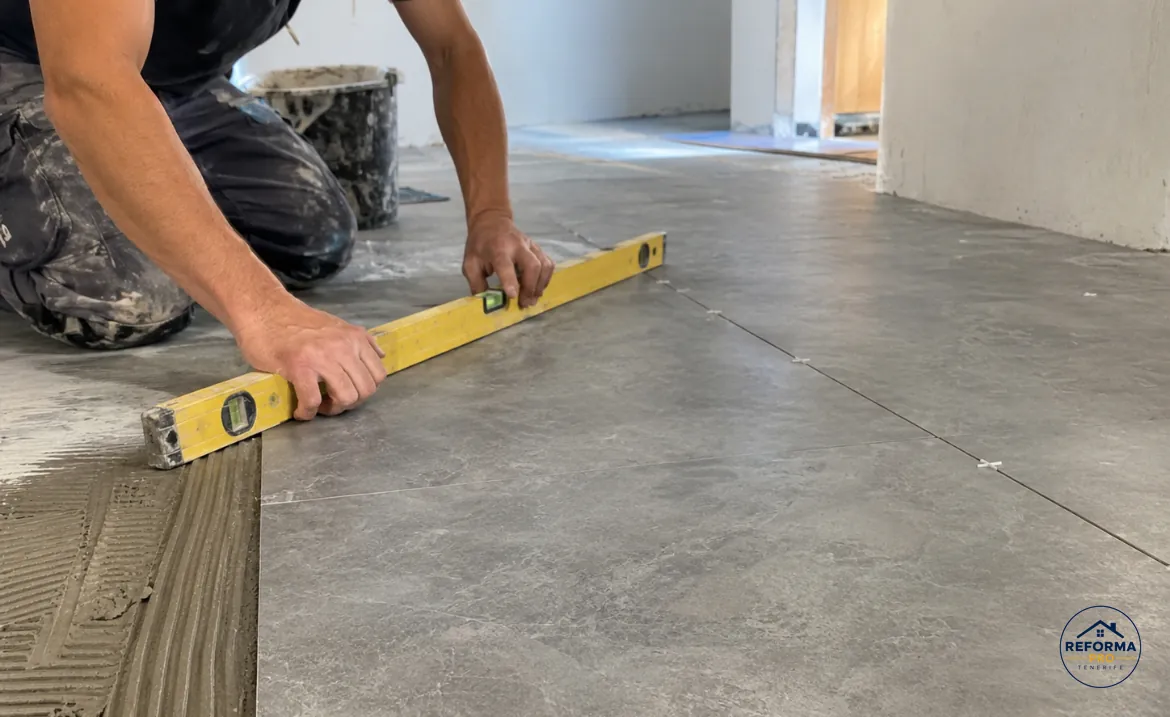
The substrate must be sound, clean and even, without residues that could impair adhesion. Before laying, we check levels, doors and the cutting layout. Adhesive and grout must suit both the tile and the base, with the necessary joints and product timings respected.
To care for it, remove sand and dust and use a cleaner compatible with the finish and grout. Avoid routinely using acidic products. Our floor installation service in Tenerife assesses everything from preparation to junctions with rooms being retained.
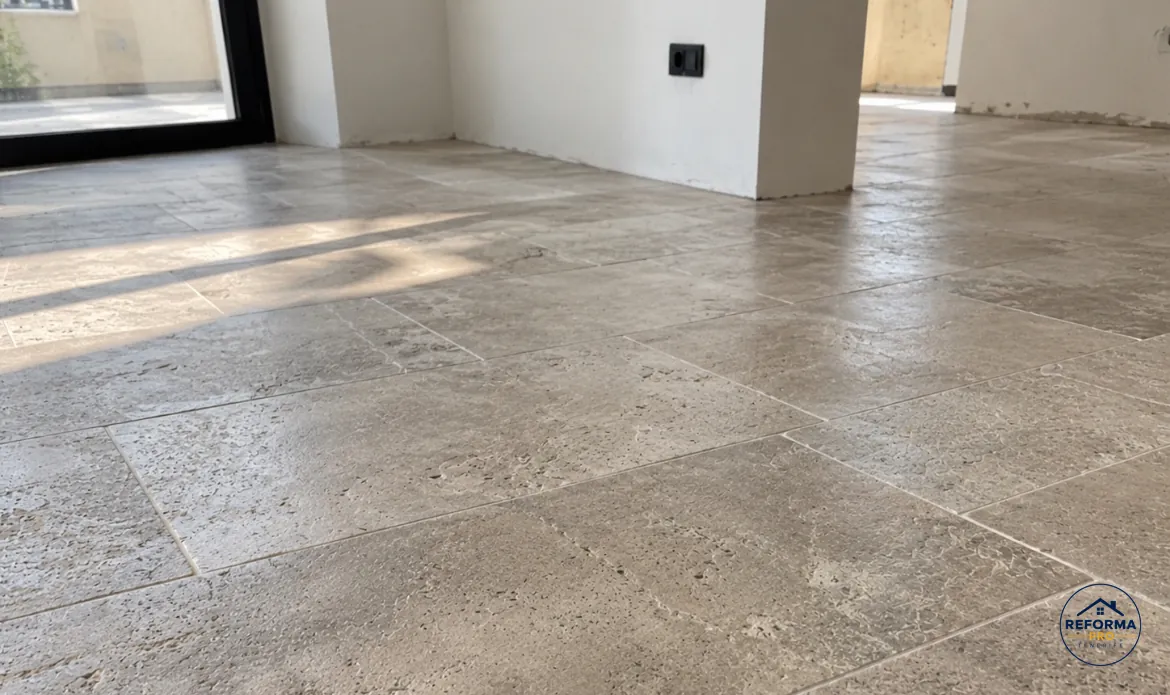
Porcelain stoneware: low absorption and a choice of finishes
Porcelain stoneware is a ceramic material with low water absorption. It offers stone, wood and marble effects and is practical for frequently used areas. Low absorption does not waterproof a bathroom or terrace on its own: the substrate, joints and protection against water matter too.
It can be laid in living rooms, kitchens, bathrooms and outdoors if the product is suitable for that use. On Tenerife terraces, we check slip resistance, sun exposure and drainage. An indoor polished porcelain stoneware tile should not be used outdoors simply to continue the same design.
Large-format porcelain stoneware: preparation and installation
Large formats need a particularly even base and space to transport, handle and cut the tiles. We plan the layout and apply adhesive appropriately to achieve the required contact. Levelling clips help during laying, but do not replace preparation or correct voids beneath tiles.
Maintenance to suit the texture
Remove sand before cleaning. Textured finishes may need more attention than smooth ones to remove dirt. Distinguish everyday dirt from building residues: do not apply a residue remover without checking compatibility with tiles, grout and profiles.
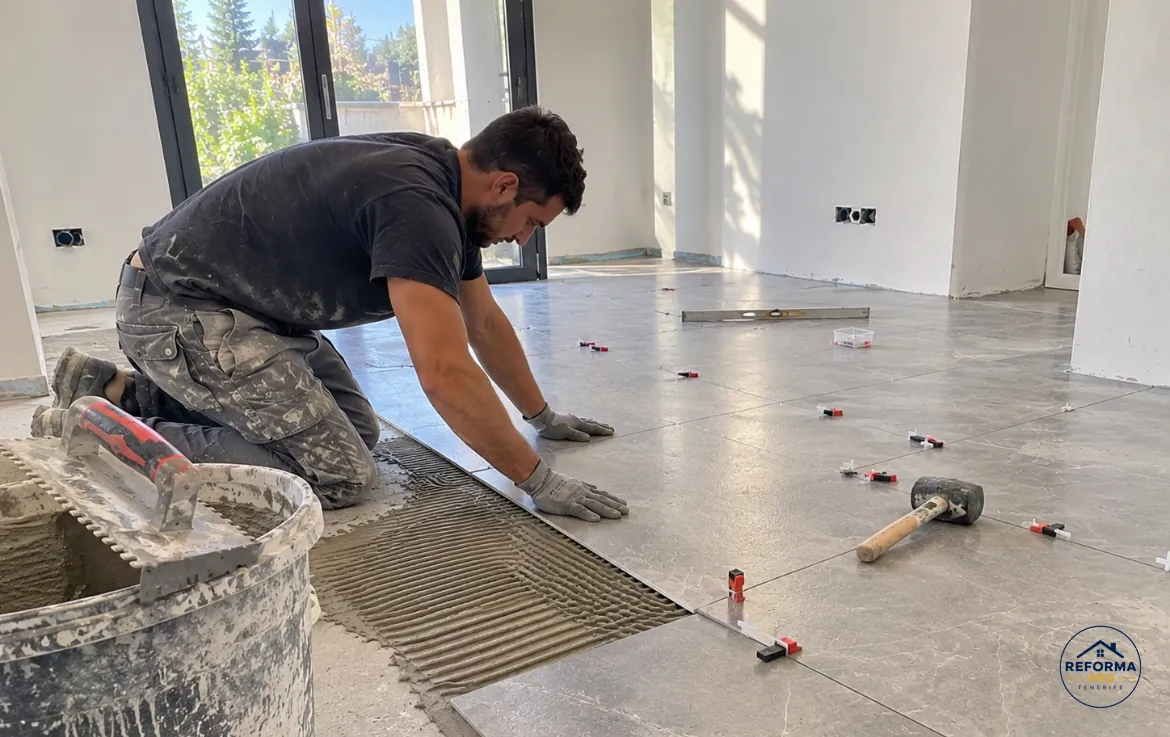
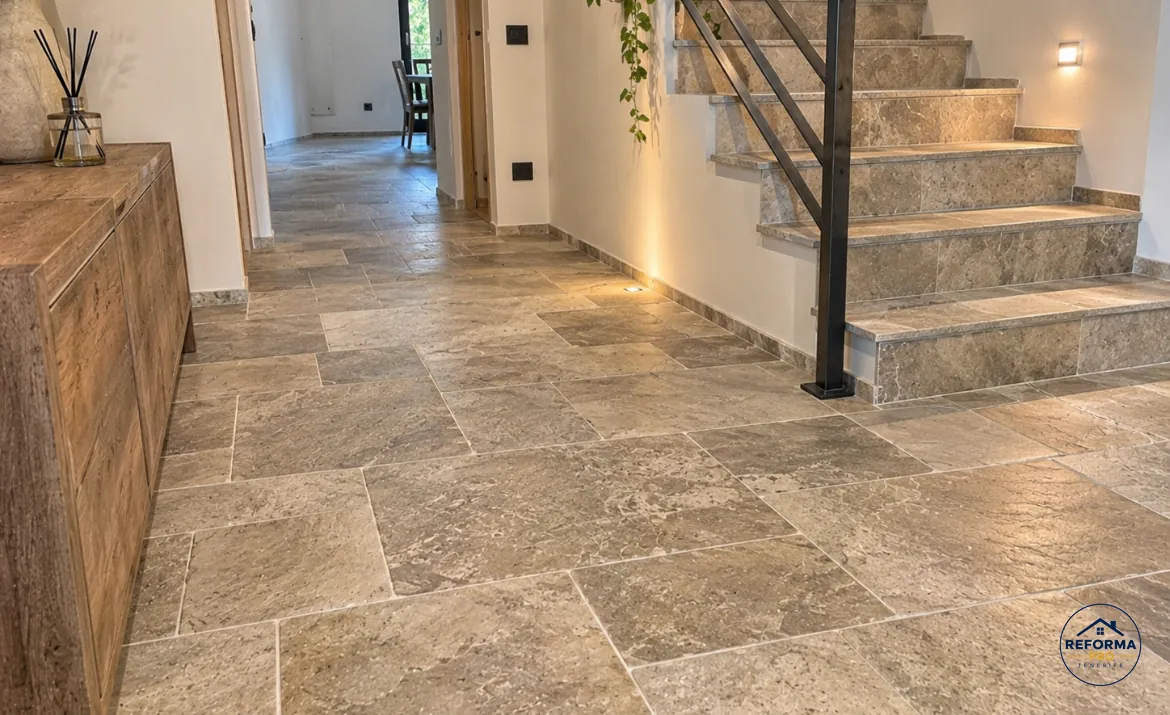
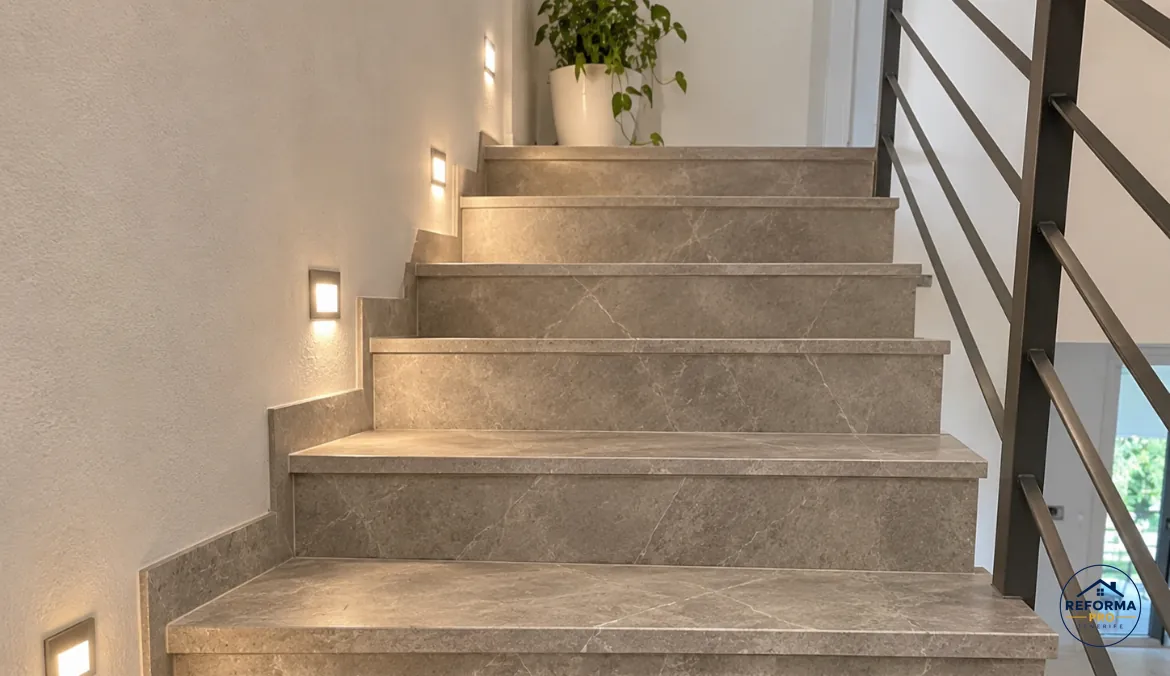
Marble flooring: natural stone with specific care needs
We install marble flooring, a natural stone whose veining and variations form part of the finish. Unlike marble-effect porcelain stoneware, it does not reproduce a manufactured pattern. It is worth assessing the pieces together and agreeing their arrangement to incorporate changes in tone and veining.
Its appeal is the presence of natural stone in living rooms, entrance halls and other indoor areas. Appearance is not the only consideration: bathrooms or areas exposed to water require a review of the finish and slip resistance. Outdoors, the particular stone’s suitability and response to exposure must be checked.
Preparation, installation and stone care
The base must be stable, even and compatible with the proposed system. We use installation products suited to the stone to reduce the risk of staining or changes in appearance; joints and junctions are also planned. An adhesive used for another tile is not necessarily suitable for every marble.
Lemon, vinegar and some cleaners can mark it. Clean spills promptly and use products compatible with natural stone. The need for surface protection is assessed according to the stone, finish and use, without promising immunity to stains or wear.
Laminate flooring: a decorative finish for interiors
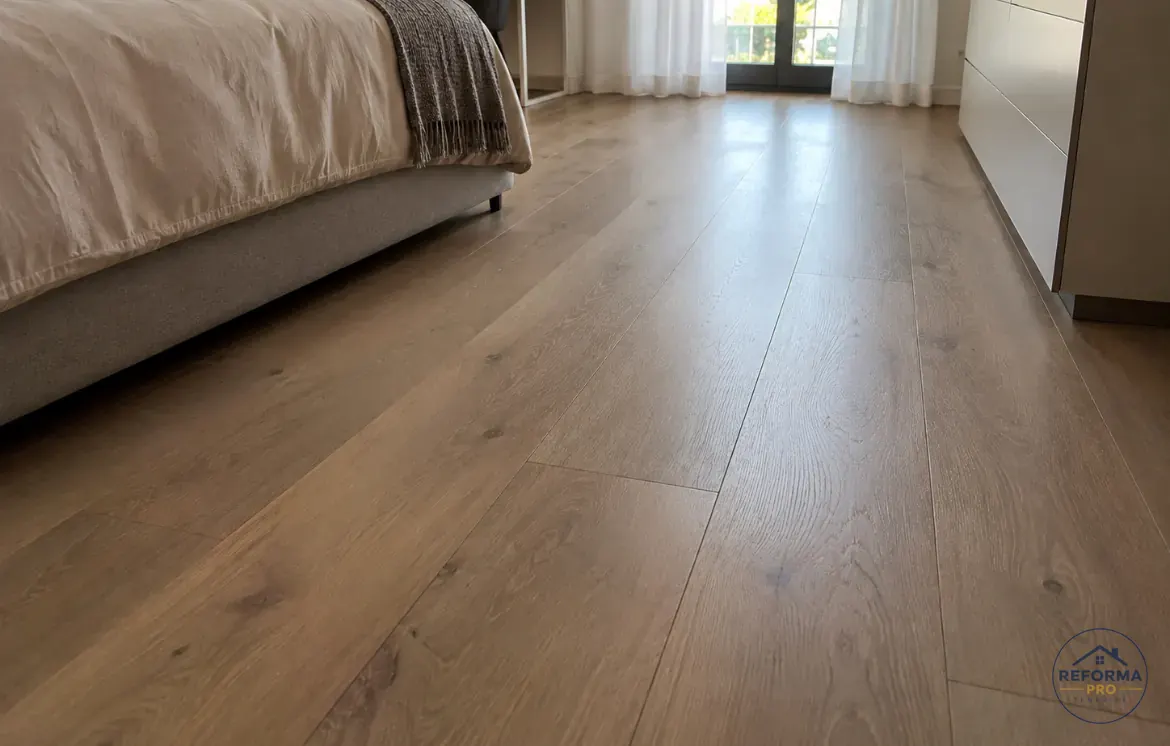
Laminate combines a core and several layers, with a decorative surface reproducing wood or other designs. It is neither solid wood nor vinyl. Its advantages are visual variety and, depending on the system, floating installation without bonding the boards to the substrate.
It generally suits bedrooms, living rooms and studies. In Tenerife, we check base moisture, ventilation and the room’s exposure. For kitchens or bathrooms, the model’s suitability and limitations around water must be verified; a marketing description is no substitute for that check.
Preparation, floating installation and maintenance
The base must be dry within the system’s limits, sound and sufficiently even. We install compatible underlay and respect perimeter clearances and transitions. Movement must not be blocked with rigid trims, nor significant unevenness compensated for with soft underlay.
Avoid standing water and remove sand before using a slightly damp mop, following the manufacturer’s instructions. Protect furniture feet. See our laminate flooring service and the guide comparing laminate with porcelain stoneware for more detail on this choice.
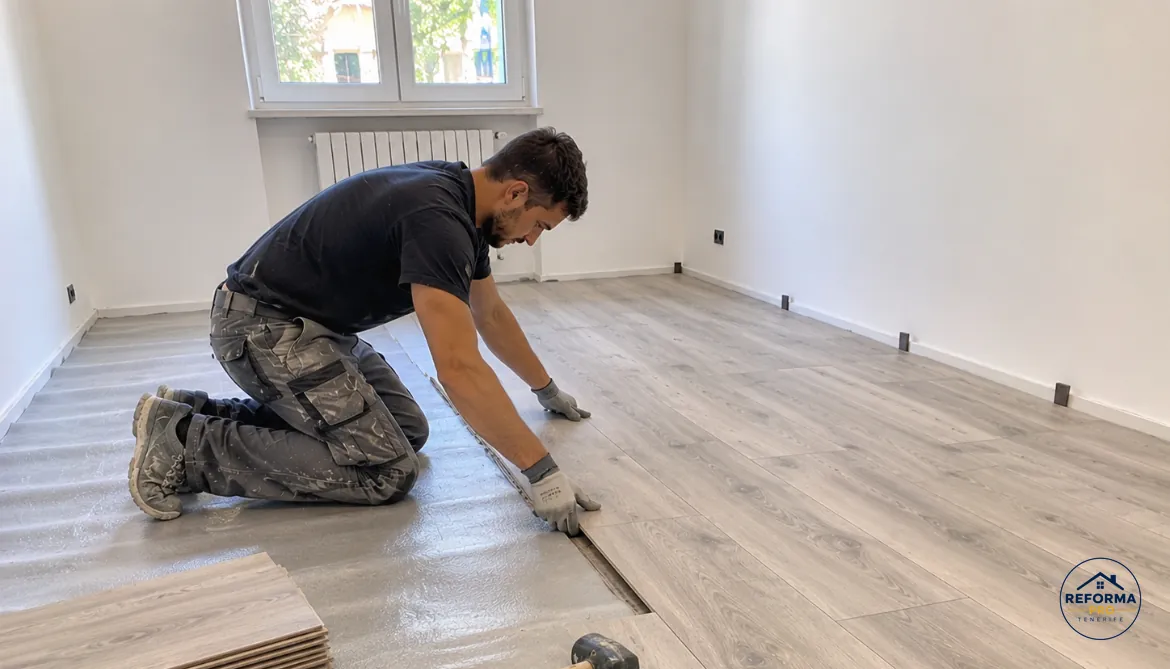
PVC (vinyl) flooring: formats and applications
We install PVC (vinyl) flooring. It comes in rolls, planks and tiles, with bonded or click systems depending on the product. To distinguish it from SPC, this section focuses on flexible vinyl. The specific format and installation method are determined by the room and the manufacturer’s documentation.
Its advantages are decorative variety and an easy-clean surface. It can suit bedrooms, living rooms and other indoor areas; for kitchens or bathrooms, the suitability of the complete system is checked. Water resistance does not solve a leak or mean that every model tolerates intense direct sunlight.
Preparation, installation and maintenance of flexible vinyl
The base must be clean, dry, stable and very even: flexible vinyl can show small irregularities or substrate joints through the surface. An existing floor merely looking smooth is not enough. Bonded models require compatible adhesive and installation within its working times; other systems have their own requirements.
For maintenance, remove particles before cleaning and avoid abrasives, dragging and incompatible products. Protect furniture contact points and follow instructions on sunlight and cleaning, rather than routinely applying waxes or treatments.
SPC flooring: rigid core and click installation
We also install SPC flooring. The initials stand for stone-plastic composite: a blend of mineral filler and polymer forming a rigid core, usually supplied as click planks or tiles. It provides stability and an easy-clean decorative finish, but is not indestructible and does not remove the need for a suitable substrate.
It can suit living rooms, bedrooms and circulation areas. In kitchens or bathrooms, we check product suitability and form the specified junctions. For Tenerife homes with large windows, we review temperature and direct sunlight restrictions: not all models tolerate the same conditions.
Flexible vinyl and SPC: what is the difference?
Both may be marketed within the vinyl family, but flexible PVC follows the base more closely while SPC incorporates a rigid core. A click connection alone does not identify SPC. Rigidity does not permit installation over unevenness exceeding the manufacturer’s tolerances either.
Preparation, installation and maintenance
We check evenness, moisture and underlay compatibility, without doubling up where the system does not allow it. Perimeters and transitions are respected so the floating floor is not restrained. For care, remove sand, avoid dragging furniture and use compatible cleaning methods without leaving standing water.
Differences between the six flooring materials
- Ceramic
- Strengths: Variety of designs
- Suitable areas: Indoors; outdoors depending on the product
- Maintenance: Compatible cleaning and grout care
- Porcelain stoneware
- Strengths: Low absorption
- Suitable areas: Interiors and terraces with a suitable product
- Maintenance: Remove sand and clean to suit the texture
- Marble
- Strengths: Natural stone veining
- Suitable areas: Living rooms and entrance halls
- Maintenance: Avoid acids and clean spills promptly
- Laminate
- Strengths: Decorative finish
- Suitable areas: Bedrooms, living rooms and studies
- Maintenance: Little water and protection against dragging
- Flexible PVC (vinyl)
- Strengths: Range of formats
- Suitable areas: Indoors depending on the system
- Maintenance: Avoid abrasives and incompatible products
- SPC
- Strengths: Rigid core and click installation
- Suitable areas: Indoors depending on product and exposure
- Maintenance: Remove sand and protect contact points
Wall coverings and floor junctions
The tile installer’s work coordinates cuts with furniture and taps. The guide to wall tiling quotes per square metre explains measurement: floor rates are not the same as wall rates.
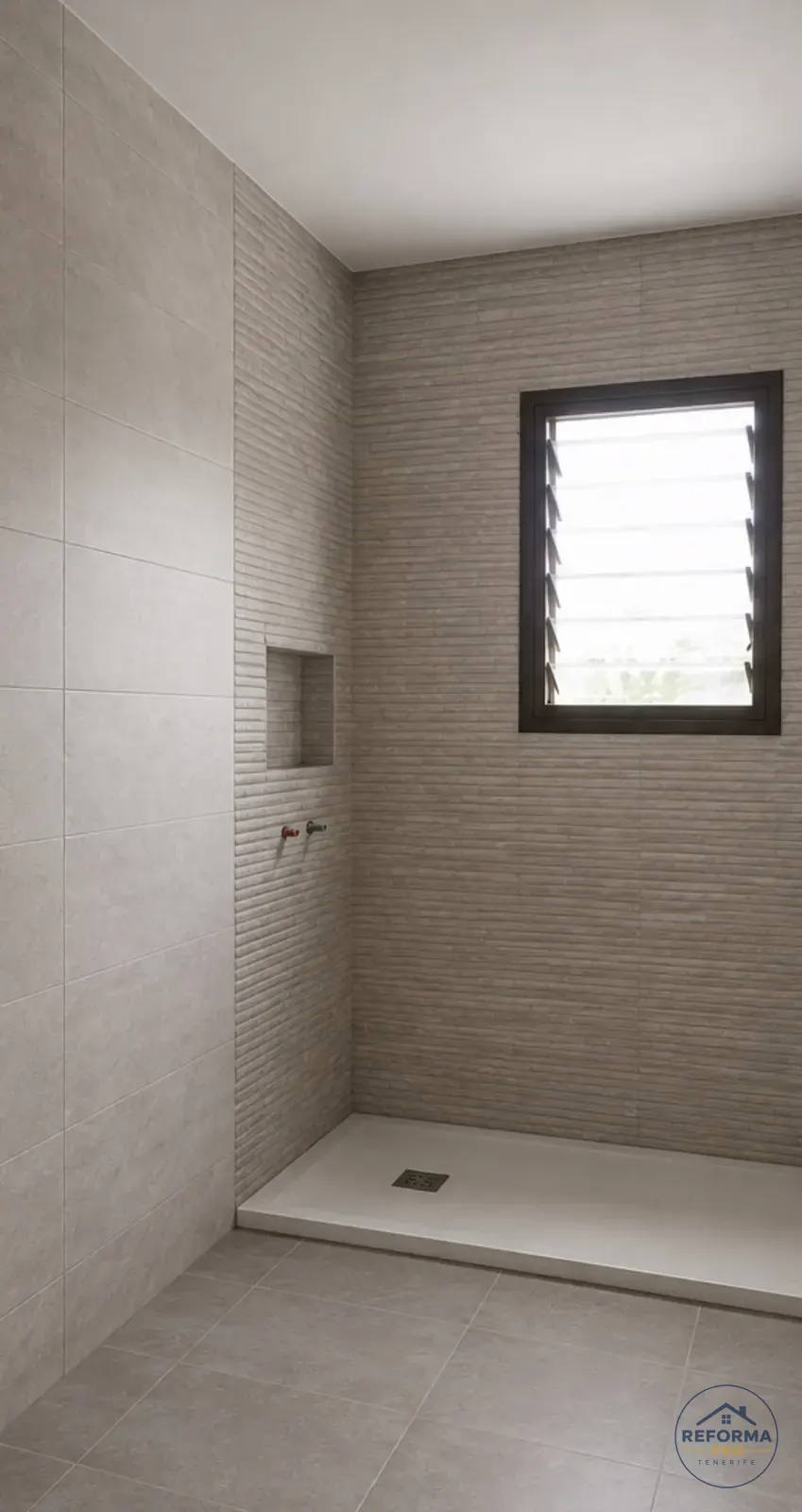
Among wall coverings, we also assess microcement and large-format bathroom panels. No finish should conceal active damp.
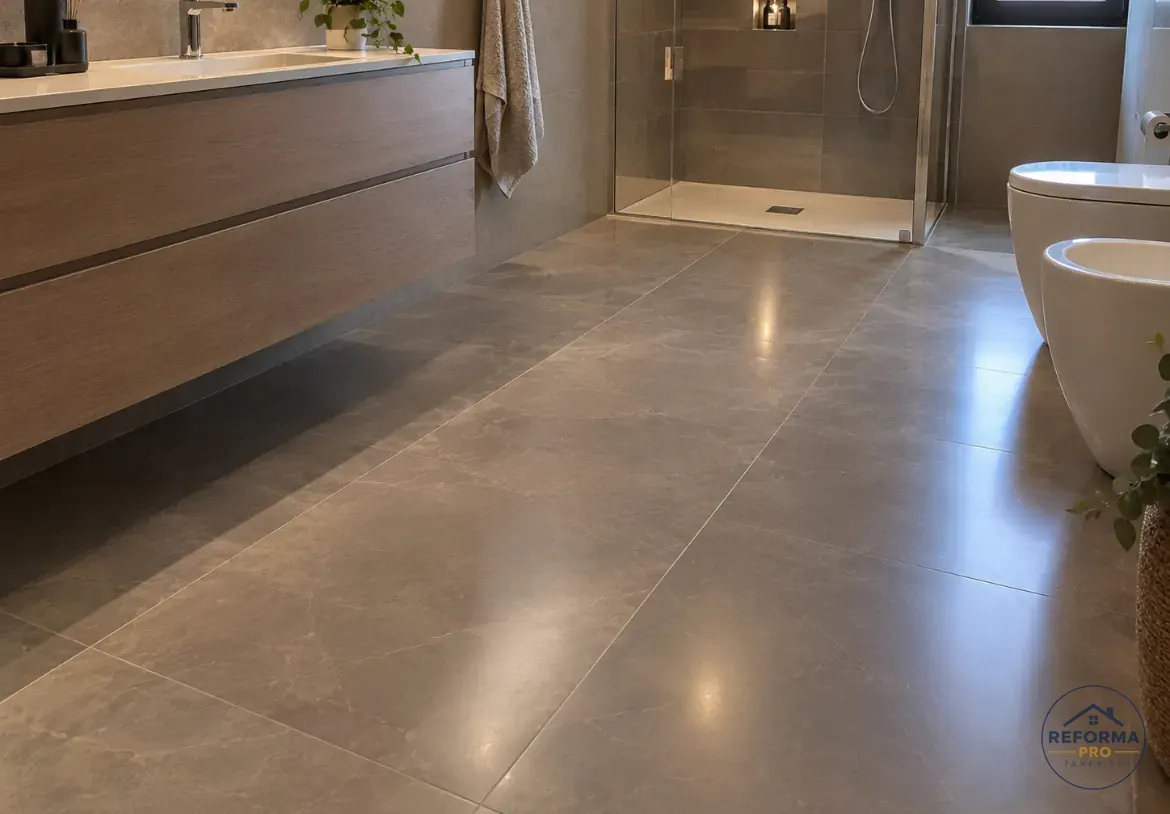
Removing old flooring and levelling
We protect access routes and retained elements and organise waste. In buildings from the 1970s and 1980s, old layers and services should be checked. Exposing the base may reveal weak screeds or cracks requiring assessment.
Loose residues are removed and the base is made even with compatible products. A terrace needs falls towards drains, not a horizontal surface. If there are leaks, waterproofing is assessed before the finish.
Joints, skirting boards and profiles
Tile joints do not replace movement joints. Junctions are detailed to suit the substrate and system; a narrow joint does not mean joint-free installation. Floating floors must not be restrained at the perimeter.
We agree skirting boards and profiles before starting. We check door opening and removal of under-counter appliances: a profile should not conceal an avoidable change in level.
Sun, salt and sand in Tenerife
On flooring jobs in Costa Adeje, sun and sand call for attention to exposure and cleaning, particularly in holiday accommodation. Terraces also need consideration of thermal movement and safety when wet.
In damp homes needing flooring in Puerto de la Cruz, ventilation does not replace investigation of leaks. Remove sand and salt deposits without abrasive tools. Durability depends on the whole system.
What affects the price?
The indicative flooring reference is 22 – 70 €/m², and demolition is 18 – 45 €/m². These are not material-specific rates and are not added together if one item already includes another. IGIC not included; the final price is set in writing after the free site visit.
Measurements, substrate, layout, access and finishing details affect the cost. Material supply is detailed in writing. Check renovation prices or prepare your enquiry with the indicative AI quote.
Work process and hiring us directly
- Free site visit: measurements, substrate, levels and access.
- Written, itemised and transparent quote, with scope and exclusions.
- Planning protection, community working hours and procedures required by the local council.
- Affected services first; then preparation, installation and finishing.
- Final checks and guidance on cleaning and bringing the floor into use.
Why hire Reforma Pro Tenerife directly?
We are an Italian team focused on practical renovation work, based in Puertito de Güímar and working across the island. We work without intermediaries, with personal attention and care over finishes. We show photos of our own work and offer photographic updates via WhatsApp for owners living abroad.
Frequently asked questions
Can new flooring be laid over the old one?
Sometimes yes, if the existing floor is firmly bonded and door heights allow for it. We check this during the site visit before deciding.
Which material holds up best in Tenerife?
In coastal areas, a low-porosity material with well-sealed grout joints is recommended, as salt air and humidity take a heavy toll on finishes.
How do I choose between the six materials?
Start with use, water, sun exposure and the maintenance you are willing to do. Then compare samples and complete systems, not just the price or appearance of a single piece.
Does a floating floor stop noise reaching neighbours?
Not on its own. Acoustic underlay must be compatible, but the result also depends on the floor structure and junctions. No specific improvement is promised without assessment.
Can a home be finished without skirting boards?
Alternative details exist, but they must protect the junction and respect the necessary clearances. With a floating floor, the perimeter cannot be filled rigidly to hide the gap.
What happens if damage is found when the floor is removed?
It is documented and the necessary repair is explained. If the planned scope changes, the additional item is presented for approval before continuing.
When can furniture be put back?
It depends on the system, adhesives and drying. We explain the conditions for use; a surface that appears dry is not necessarily ready for every load.
Is it worth keeping spare pieces?
Yes, it is worth agreeing a reserve and keeping the reference, shade and batch details. This makes repairs easier, although differences may appear compared with flooring exposed to use and light.