

Where it can be applied
It is suitable for interiors and, with the right system, for exteriors as well.
- Living room, bedroom and hallway floors with no joints
- Bathrooms and built-in shower trays
- Kitchen walls and splashbacks
- Stairs and worktops
- Terraces, using a specific exterior system
How we work
We check the subfloor, repair cracks and uneven levels, lay mesh and primer, apply several coats of microcement, and finish with a protective sealant. In wet areas like showers, sealing and prior waterproofing are the most important part.
Pros and limits
Pros: seamless surface, easy to clean, and often without demolition. Limits: it requires a stable subfloor; if the old floor is loose or has damp, it must be fixed first. We will tell you clearly during the site visit.
Work photos
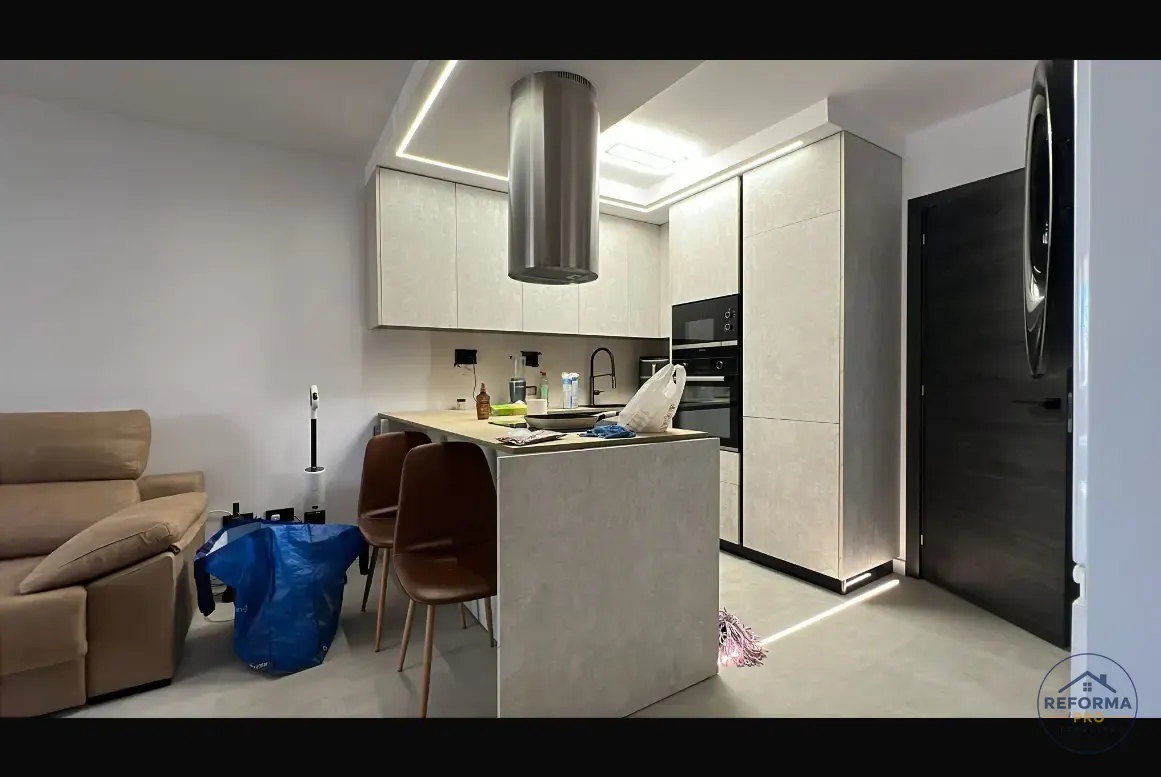
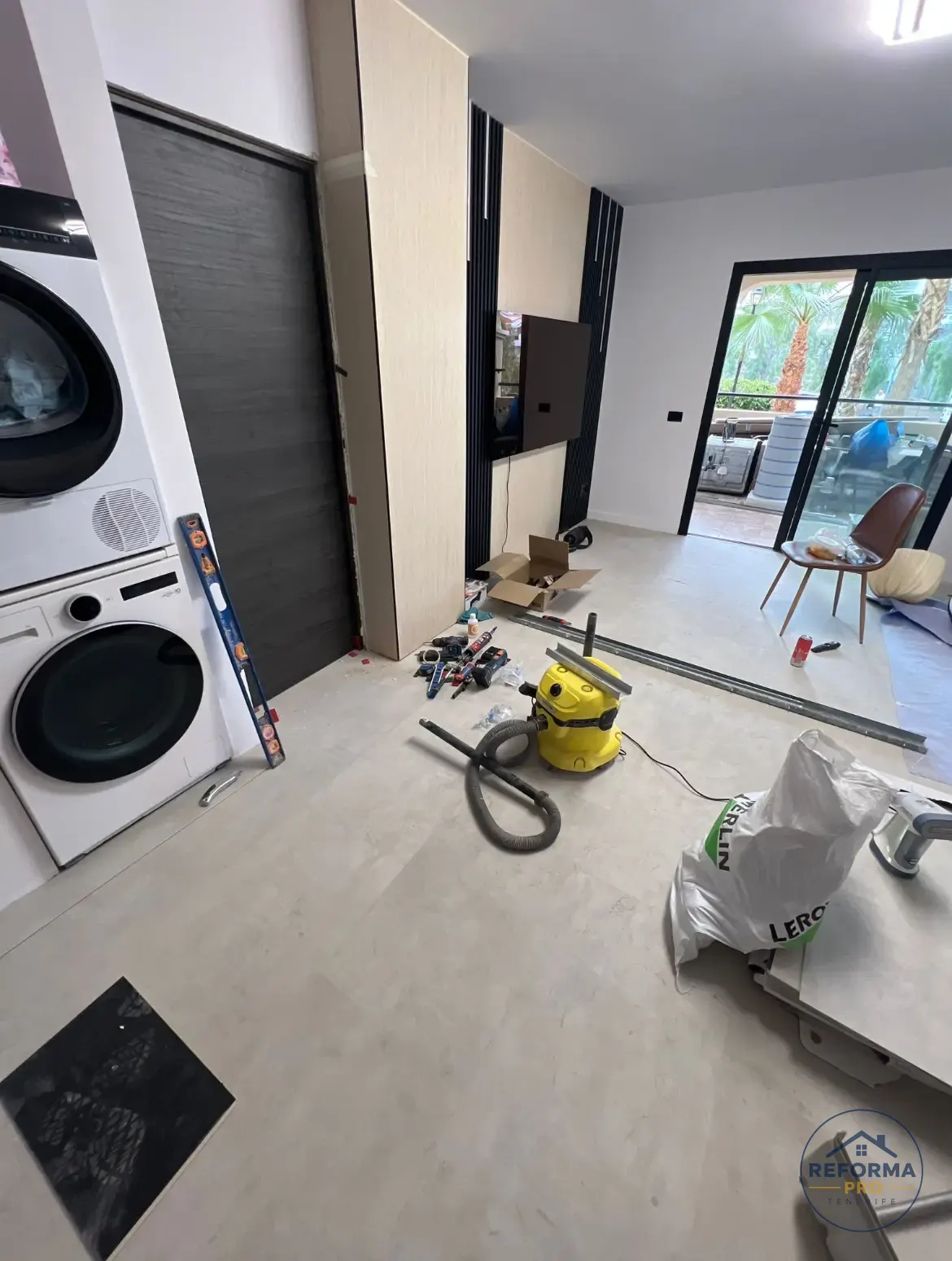
Microcement for floors, bathrooms and walls: different demands
Visual continuity can bring a space together, but it does not make a decorative wall equivalent to a bathroom floor. On a wall, pattern and the relationship with light are particularly important. Flooring also faces foot traffic, furniture movement, cleaning and slip risks; the system selected must suit its actual use.
Before choosing a colour, describe who uses the room and how it is maintained. An everyday bathroom, a holiday rental and a lightly used living room may need different decisions on texture and protection. Reforma Pro Tenerife bases that choice on the substrate and conditions of use, not just a reference image.
What should be checked before applying microcement?
Adhesion, cohesion, moisture and stability are checked. A thin continuous coating reflects some of what happens underneath: it does not automatically secure loose tiles or correct movement in the base. Hollow areas, active cracks or major level differences must first be assessed to decide how to resolve them and whether the substrate is suitable.
Existing joints need assessment, especially movement joints, which should not simply be hidden to create a photograph without lines. Transitions between materials and junctions with joinery are checked too. The solution may retain necessary joints; continuous does not mean absolutely no technical interruptions.
Moisture cannot be judged by touch
An apparently dry surface may contain moisture incompatible with the system. Required conditions must be checked and the cause of stains or salt deposits investigated before sealing. The guide to damp in Tenerife explains problems that cannot be resolved by changing the visible finish.
What do mesh and microcement layers do?
Preparation may include levelling, priming and mesh reinforcement, depending on the system and substrate. Mesh helps distribute certain stresses, but does not make a moving base stable or guarantee that cracks will never appear. Its position, overlaps and compatibility are part of a complete solution, not a standalone addition.
Base and finishing coats have different functions and limited application thicknesses. Specified drying times and fine finishing are respected before moving on. Trying to level a very uneven floor with decorative coats changes the process and may compromise the result; that correction must be treated as separate preparation.
- Inspect and repair the substrate before selecting the application sequence.
- Detail joints, junctions and material transitions appropriately.
- Apply primer, reinforcement and coats according to the system's instructions.
- Refine, clean and check conditions before final protection.
Microcement in bathrooms: sealing is not waterproofing
In a shower, choosing a splash-resistant finish is not enough. Waterproofing, falls, drainage and junctions with outlets and pipe penetrations must be resolved. The surface sealer protects the finish, but does not replace a waterproofing solution where one is needed.
Insufficient falls leave standing water even when the surface looks continuous. Before coating, corners, thresholds and junctions with other elements are checked. If that protection needs redoing, waterproofing is coordinated as a separate element compatible with the coating.
Slip behaviour when wet is also assessed. A dry, smooth sample does not demonstrate how a wet floor will perform. The chosen texture must suit the space, balancing safety in use, appearance and ease of cleaning.
How to choose a realistic microcement colour and texture sample
Hand-applied microcement may show variations in tone and pattern. If you want a completely uniform surface like an industrially manufactured product, discuss that expectation before commissioning. A sample helps agree the desired amount of visual movement and what finish is considered representative.
Assess it with the intended sealer, because protection can change the perceived colour and sheen. View it beside adjacent flooring and under the final lighting too. On walls, side lighting highlights marks; on floors, windows can create reflections absent from a small catalogue photograph.
For a decorative wall that does not need flooring performance, it may be worth comparing a decorative plaster finish. The choice should reflect the effect and use, rather than treating all continuous coatings as interchangeable.
When can you walk on and use a microcement-finished room?
A small project may take approximately a week for preparation, coats and protection; a bathroom needing prior repairs or several spaces may take one or two weeks or more. These are planning allowances, subject to the system, substrate and environment. The site visit distinguishes application days from necessary waiting times.
Permission for light foot traffic does not mean furniture can be moved in, rugs laid or the shower used. The sealer needs to reach the specified conditions for each use. A reoccupation sequence is agreed, and other building work over the finish is avoided during that period.
In Tenerife's humid north, drying may be slower; in the south, heat and direct sunlight also affect application. In coastal areas, salt deposits and substrate moisture are checked. Ventilation is organised without forcing uneven drying or replacing necessary checks with a fixed handover date.
How to clean and maintain microcement without damaging the sealer
Routine cleaning uses products compatible with the applied protection, following its instructions. Remove sand and particles before mopping, as these can act as abrasives under shoes or furniture. Do not test a strong descaler directly on a visible area.
Furniture feet need suitable protection, and heavy objects should be lifted rather than dragged. Spills are removed promptly and worn areas checked. The need to renew the protection depends on use and the system, not a universal interval for every home.
An impact can mark the coating, and a repair may remain visible because of differences in tone or pattern. If you want a scratch-proof or maintenance-free surface, reconsider the choice. The walls and finishes guide puts other options for vertical surfaces in context.
How a microcement quote is prepared in Tenerife
There is no official microcement rate: a price is provided after the free site visit. Any guidance is indicative and excludes IGIC; the final price is determined after inspecting the substrate and defining the system. The quote must identify materials and supply, without assuming they are included in a generic labour reference.
Repairs, geometry, junctions, surface area, access and the demands of wet or outdoor use all affect the price. A small room with many corners may need more detailed work than a large open surface. The quote also clarifies whether doors need adjusting, transitions resolving and existing joints retaining.
Ask for preparation, application, protection and reoccupation conditions to be separated. General renovation prices should not be used as a substitute rate for this system. In holiday rentals, allowing time between the end of application and guests' arrival is particularly important.
Frequently asked questions
Can microcement be applied over tiles?
Yes, provided the tiles are firmly adhered and have no loose pieces. We fill the grout joints and prepare the surface before applying it.
How much does microcement cost in Tenerife?
We do not publish a fixed rate because it depends on the subfloor, the square metres, and whether it is indoors, outdoors or a shower area. Send us photos on WhatsApp and we will provide a quote after a free site visit.
Can microcement crack?
Yes, it can crack if the substrate moves or unresolved problems exist, among other causes. Preparation and reinforcement reduce certain risks but do not eliminate all building movement.
Will a local repair be visible?
It may show through differences in tone, texture or sheen, even using a similar product reference. Before repairing, assess whether a small area will suffice or whether treating a whole surface is preferable.
Can I put down a rug as soon as the work is finished?
Wait for the curing and covering conditions specified for the applied protection. Covering too soon may affect the process; afterwards, check the compatibility of the rug backing too.
Is any bathroom cleaner suitable?
No: some acids, abrasives or concentrated products can affect the sealer. Use the method recommended for the installed system and seek advice before applying an unfamiliar product.
Is microcement suitable for a sunny terrace?
Only if a system suitable for outdoor use is selected and the substrate, drainage, exposure and joints are assessed. A living-room solution cannot automatically be transferred to a terrace exposed to temperature changes and water.
Can a washing machine be moved across the new finish?
The specified waiting time for loads must be respected and the route protected, without dragging the appliance. Its feet and vibration control must also be properly addressed to prevent damage during use.