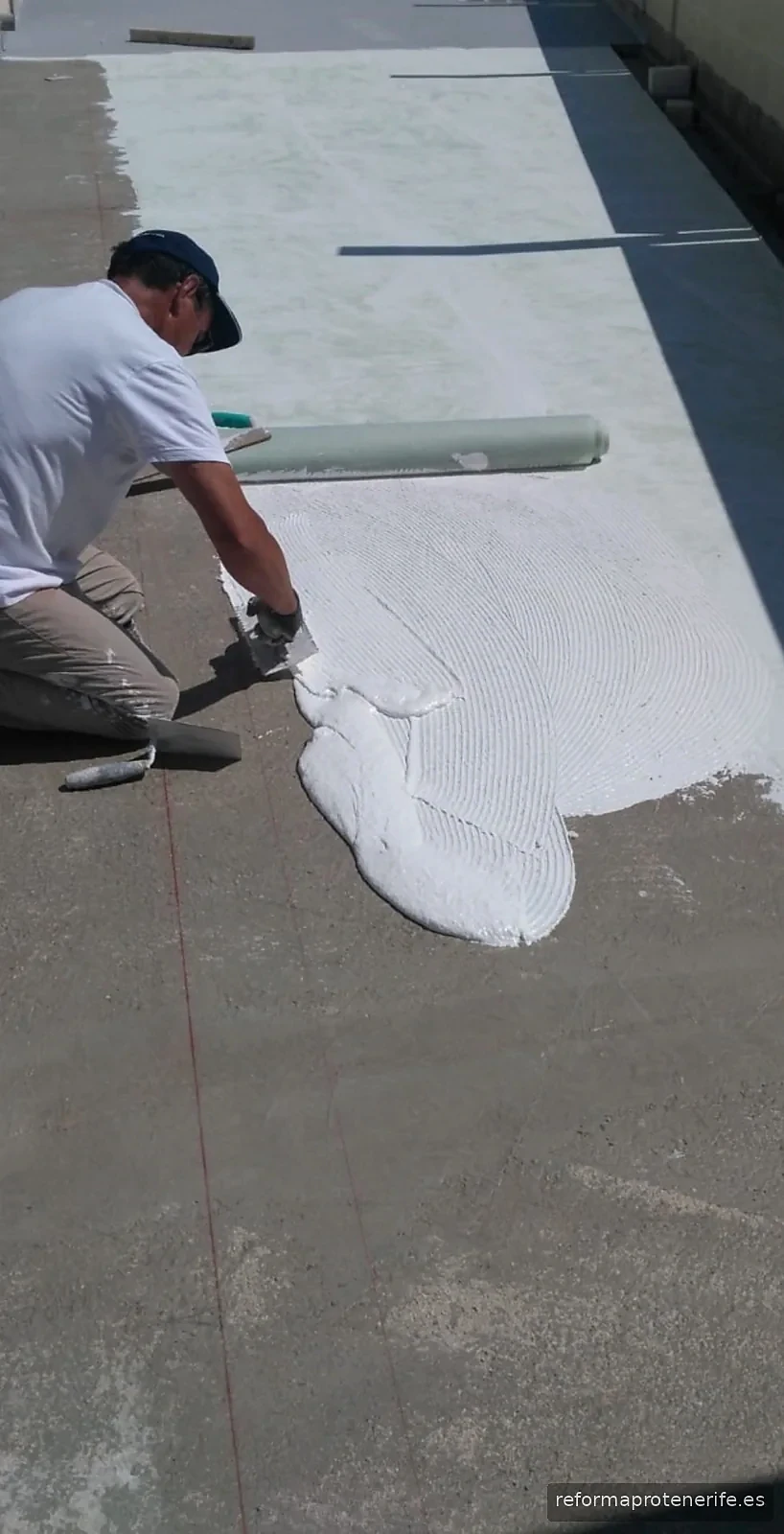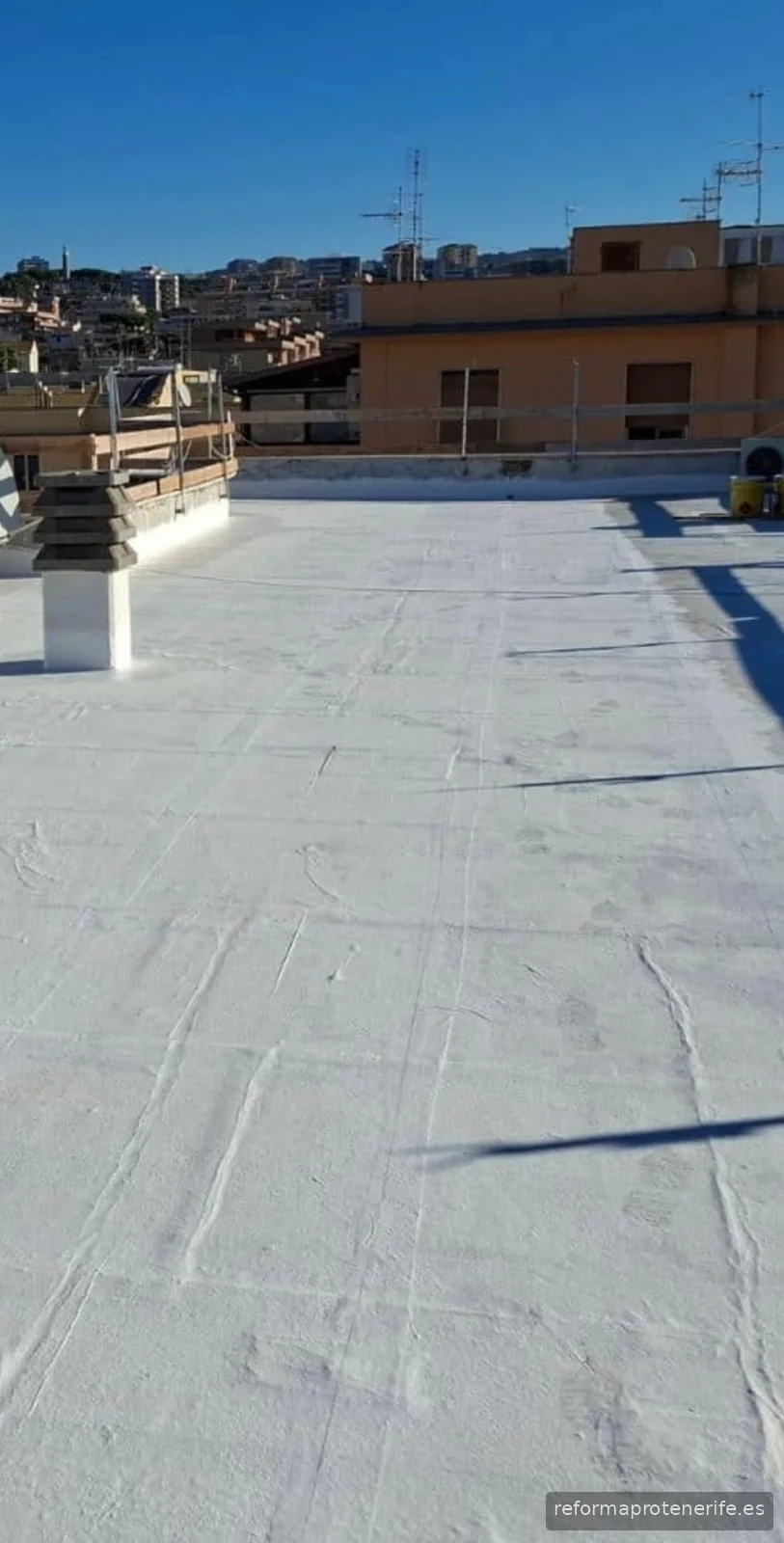
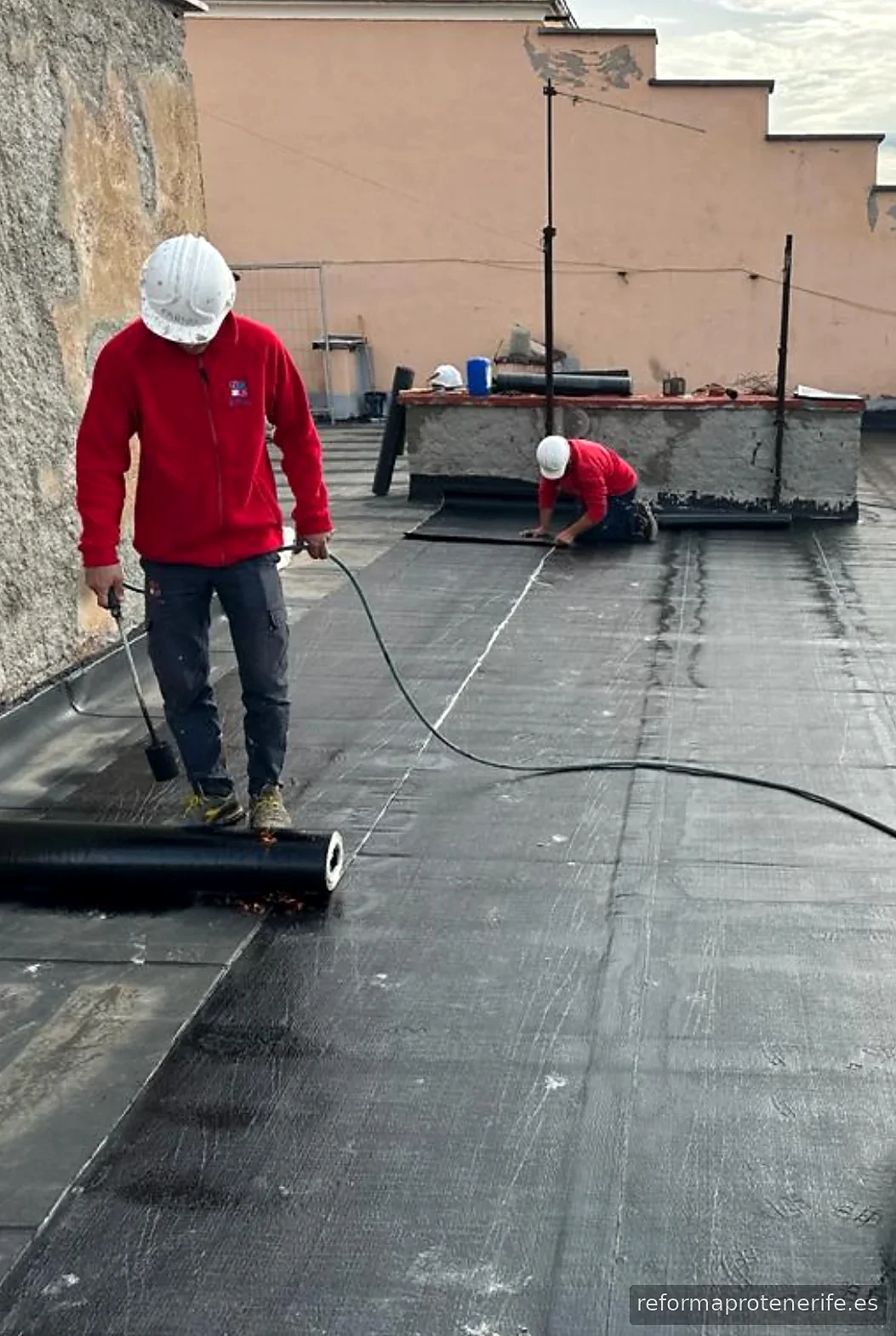
Two cross-laid layers
We lay two layers of bituminous membrane in a cross-laid pattern. First, we plan the work by checking the substrate and the roof's vulnerable points.
Materials and installation included
The benchmark of around 100 €/m² includes the membranes and installation. We confirm the quote after inspecting the surface area and roof condition. It is not equivalent to thermal insulation.
What to check on a flat roof before installing two-layer waterproofing
The choice starts with understanding the roof: substrate, existing layers, falls and drainage points. A new membrane cannot stabilise a loose base or justify ignoring water trapped beneath it. Inspection establishes what can be retained and what must be removed before waterproofing.
Provide photographs of indoor stains and explain whether they appear during rain, after cleaning the roof terrace or continuously. Water can travel several metres through lower layers before becoming visible. Inspection should not be limited to the spot directly above the stain.
If the signs are unclear, the guide to condensation or water ingress helps distinguish possible causes. The two-layer system is intended for waterproofing: it is not a universal treatment for indoor damp and does not replace repairing a leaking pipe.
How to prepare the substrate and decide whether to remove old layers
The substrate is checked for adhesion, cleanliness, moisture and evenness. Loose, blistered or incompatible areas cannot be resolved simply by covering them. Preparation may include localised or more extensive removal, repairs and conditioning in accordance with the system to be installed.
Retaining old waterproofing only makes sense if it is compatible and leaves no hidden defects that could compromise the whole system. The accumulated weight of layers and the height of junctions and access points are also assessed. If there are doubts about the roof's structural capacity, a technical assessment is needed before adding loads.
Buildings in Tenerife from the 1970s and 1980s may have patches from different periods. These must be identified rather than assumed to accept the same treatment. A clear quote should explain the retention criteria and allow for how damage discovered during opening-up will be addressed.
Falls and outlets: directing water before protecting the roof
A flat roof must direct water towards drainage points. Flat does not mean completely horizontal. Depressions, raised outlets or corners without an escape route expose the waterproofing to standing water; waterproofing alone cannot correct that geometry.
The position and condition of outlets, their connections and the planned junction with the membranes are checked. Water must reach them without obstructions caused by repairs or changes in level. Junctions at access points are also inspected to avoid raising layers enough to compromise thresholds.
Where falls need rebuilding, this is defined as a separate item, with its own timescale and substrate requirements. For paved terraces, the terrace waterproofing guide explains the relationship between the finish and drainage. The visible floor and waterproof barrier serve different purposes.
How the two cross-laid membrane layers are installed
The specified two-layer system uses two cross-laid layers of bituminous sheet membrane. Before laying, the setting-out is planned so that layout and joints comply with the chosen system. Installation must respect substrate conditions and material instructions, without improvised combinations of incompatible solutions.
The first layer is not there to hide preparation defects, and the second does not remove the need to inspect the first. Continuity, adhesion where required and lap detailing are checked during installation. Jointing and fixing methods are specified for the membranes and substrate, rather than using a generic rule for every roof.
Cross-laying is part of the solution, but individual junctions still need their own attention. The central surface may look uniform while a pipe penetration or parapet still allows water in. Checks must therefore go beyond counting the layers installed.
Waterproofing is not the same as thermal insulation
This work is intended to prevent water ingress. It is not presented as a thermal improvement simply because it includes two membranes. Any other roof requirements must be assessed separately and expressly included in the scope, without attributing unspecified performance to the two-layer system.
Detailing parapets, joints and pipe penetrations
Junctions with vertical elements require continuity and a suitable termination. Cutting the membrane at the wall or relying entirely on a surface bead is not enough. The base, changes of plane and points where movement may concentrate stresses are inspected.
Pipe penetrations and existing supports must allow compatible, maintainable detailing. If they are too close together or to a corner, the arrangement may need changing before the membranes are laid. Movement joints must remain functional rather than being blocked by a rigid repair.
On communal roof terraces, identify which elements belong to other users and who can authorise work on them. Supports must not be moved, nor the finished system punctured, without assessing the detail. Coordination with other work is covered under installation services, helping avoid subsequent damage to the waterproofing.
Will the roof be used for maintenance access or as a terrace?
The intended use determines the system's final protection. A roof visited occasionally has different requirements from a terrace with furniture and frequent foot traffic. Two-layer waterproofing must not be considered finished for every use without defining its protection and access conditions.
If paving is planned, the upper build-up is coordinated with falls, outlets and available heights. Damage during transport and installation of this work must also be prevented. Protection must not prevent drainage maintenance or conceal finishing details before they have been inspected.
After the work, keep drains clear and inspect the roof after rainfall or any work by others. Do not drag sharp-edged items across it or install fixings without prior consultation. Regular visual checks help detect changes, but do not replace investigating an active leak.
How Tenerife's weather and access affect roofing timescales
In the north, humidity and rainfall can extend preparation and substrate drying. In the south, intense sunshine and surface temperatures also affect work. Coastal wind influences material handling, so planning depends on actual roof conditions.
A small, prepared roof may require several working days to a week. Removing layers, repairing the substrate or forming falls can extend the work to several weeks. These are indicative ranges subject to area, drying, access and weather; the date is confirmed after inspection.
In Santa Cruz or Puerto de la Cruz, bringing in rolls and removing waste may depend on stairs, lifts and parking. Working hours and use of communal areas are agreed with the owners' association. Check applicable permits before starting, rather than assuming every roof requires the same procedure.
What the two-layer waterproofing price per square metre includes
The indicative two-layer waterproofing price is approx. 100 €/m², including materials and installation. This excludes IGIC; the final price is confirmed after the free site visit. Measurements and roof conditions establish which additional works each case requires.
Removal of old layers, substrate repairs, new falls and final protection or paving should be itemised separately where relevant. The number of parapets, outlets and penetrations can make the work very different on two roofs of equal area. A square-metre figure alone does not describe that complexity.
The quote should identify the area, system and finishing details, along with access and planned checks. If diagnosis suggests another intervention, it is assessed within the Tenerife waterproofing service. The aim is to resolve water ingress, not impose two-layer waterproofing where the substrate or problem needs a different approach.
Frequently asked questions
What does two-layer waterproofing mean?
It is a system with two layers of bituminous membrane laid in a cross-laid pattern to waterproof the roof.
Does the price include materials?
Yes: around 100 €/m² includes materials and installation. Indicative price, excluding IGIC.
Can old repair patches be left underneath?
Only if their condition and compatibility allow them to remain within the specified solution. Loose patches or those with trapped moisture may need removing before new layers are laid.
Will two-layer waterproofing remove puddles from a flat roof?
It does not correct falls or sunken areas by itself. If water cannot reach the drains, the geometry must be assessed and the necessary corrections priced.
Can I use the roof as a terrace afterwards?
That depends on the whole roof being prepared for that use and suitably protected. This must be defined before installation because furniture, foot traffic and paving change the system's requirements.
Can work proceed if it rained the previous day?
It depends on the actual substrate condition and the system's requirements. Even if the surface looks dry, retained moisture may mean waiting or reviewing preparation.
Why does a leak return beside a pipe?
The pipe penetration may interrupt waterproofing continuity or have moved. The whole detail is inspected, not just the surface around the stain.
What should I check before taking equipment onto the repaired roof?
Check the access route, supports and any new fixings with whoever specified the system. Drilling and dragging can damage the barrier even when the membranes are newly laid.
Work photos