Price based on thickness
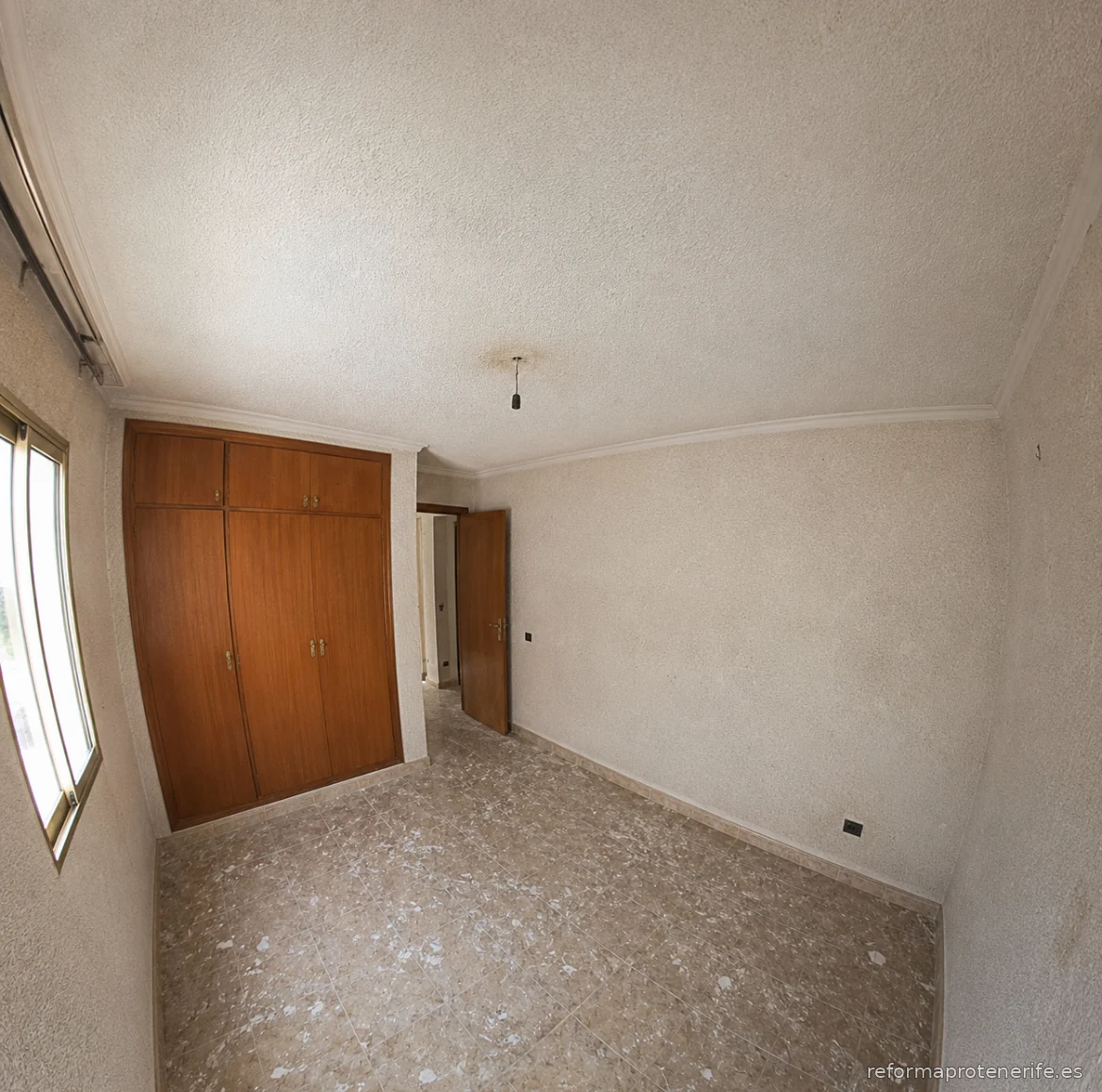
Fine gotelé: around 10–15 €/m². Medium: around 15–20 €/m². Thick or very uneven: up to 25 €/m². Indicative prices excluding IGIC; the final amount is confirmed during the free site visit.
How we do it
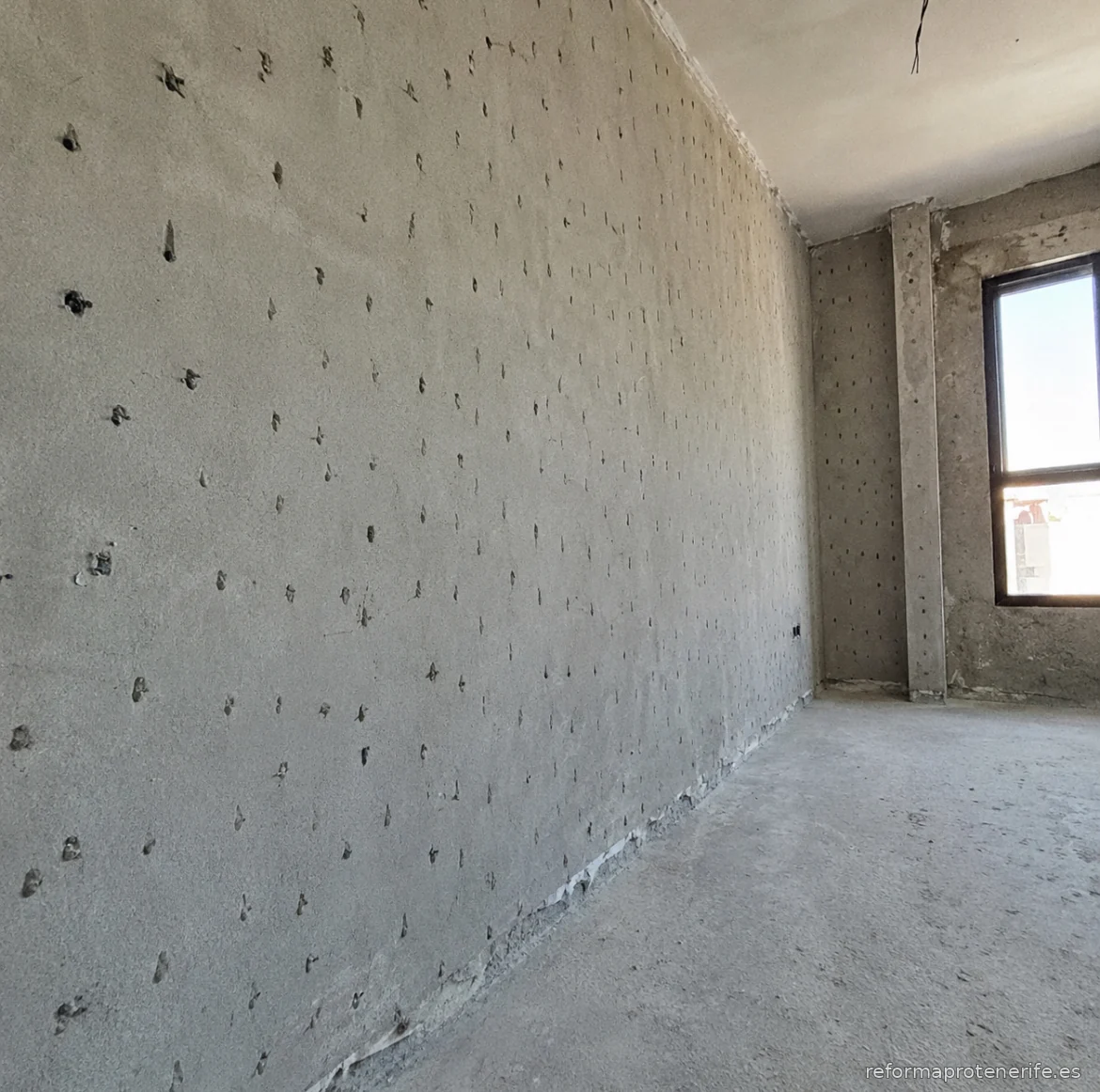
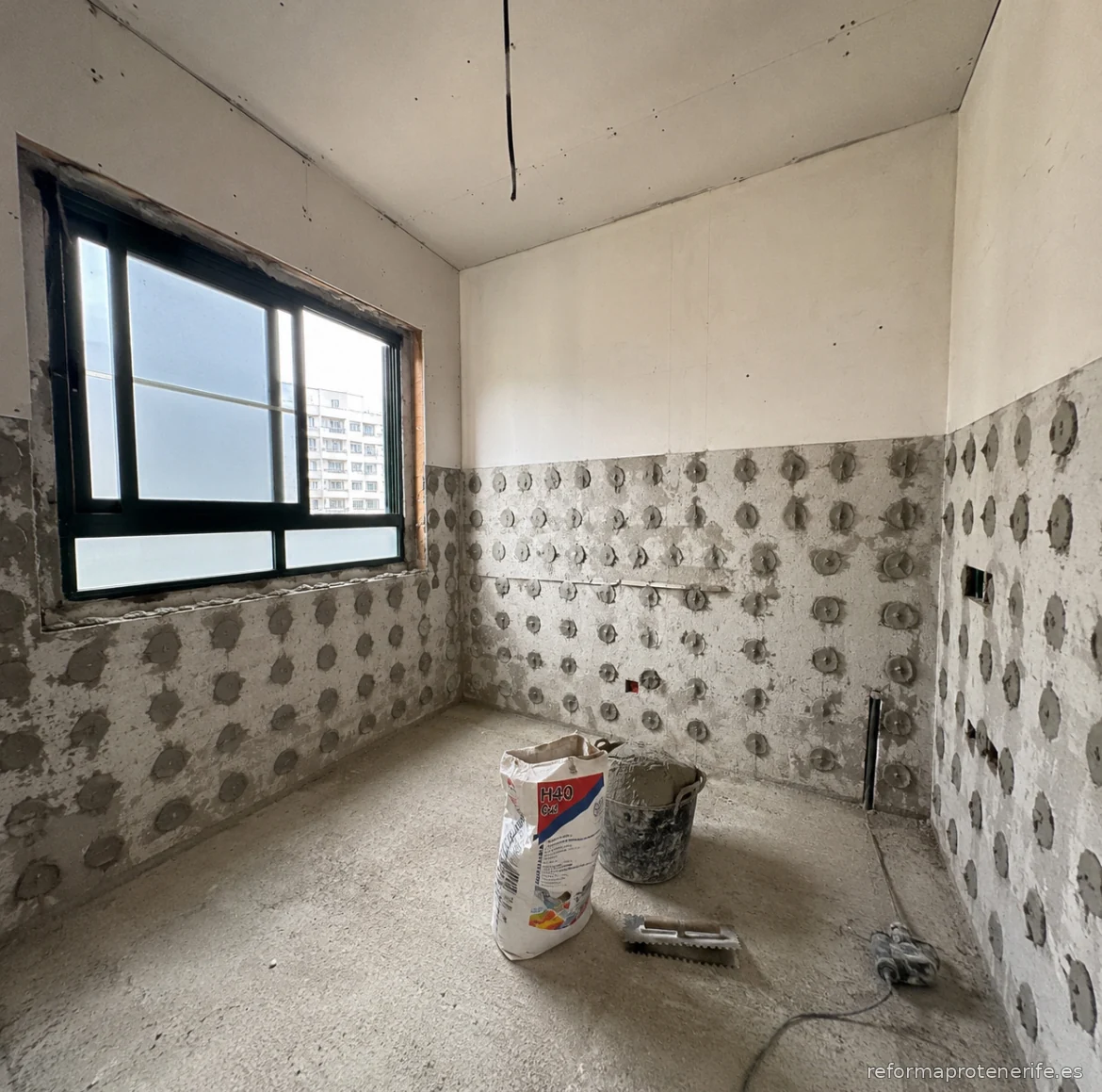
We protect floors and furniture, scrape or sand depending on the case, and apply coats of plaster (skim coating) until the wall is completely smooth.
- Protection of floors, doors and sockets
- Scraping or sanding of the gotelé
- Skim coating with plaster in multiple layers
- Fine sanding and primer
- Washable paint or decorative finishes
Finishes after gotelé removal
With a smooth wall, you can choose high-quality washable paint, Venetian plaster or microcement.
Removing gotelé: what a wall test reveals
The first decision is made on a small, representative area, not just by looking at a photograph. The coating's response, what lies beneath it and whether old layers remain bonded are checked. Patches and visibly different areas should also be tested, because one room may contain several different treatments.
The test helps estimate removal effort and establish whether the substrate is damaged during the process. It is not a demonstration of speed: it helps select a method that does not turn a texture problem into an adhesion problem. Hollow areas or damp are investigated before extending work to the rest of the home.
Scrape off the texture or level over it: choosing the method
Some coatings soften with controlled dampening, allowing the texture to be removed; others have water-resistant paint layers. Indiscriminate soaking can affect the substrate and does not resolve that difference. The initial test indicates whether gradual removal, mechanical preparation or compatible levelling is appropriate.
Where the texture is well bonded, retaining some of the coating may avoid aggressive removal, but the entire build-up must be checked for its ability to receive new layers. If it is peeling away, covering it adds weight to an unstable base. No universal method is always cleaner, cheaper or better for every wall.
Thickness is not the only consideration
A fine texture can be laborious to remove if covered by highly resistant layers. A more pronounced texture may come off easily yet leave a substrate needing repairs. The quote should explain both the visible texture and the conditions found during testing.
What does leaving a wall ready to paint mean?
Removing the peaks is not the same as achieving a finished surface. After removing or reducing the texture, pores, scratches, small level differences and uneven junctions may remain. Subsequent fine finishing is determined by the substrate's condition and the demands of the chosen finish, not a fixed number of passes.
Texture and geometry also need to be distinguished: a wall can be smooth and still have an old undulation. If you plan lighting parallel to the wall or closely fitted furniture, these conditions need checking before work. The wall skimming and decorative plaster guide explains why a thin coat alone cannot straighten a wall that is out of plumb.
How to prepare your home for dust from gotelé removal
Dust is not limited to removing the texture. Sanding the finishing coats also requires protection and cleaning between stages. On-tool extraction helps reduce spread, but cannot justify promising a dust-free home or leaving delicate textiles beside the work area.
Before starting, agree which furniture will be removed, which will be grouped together and where people and materials will pass. Closed doors alone do not always isolate a corridor effectively. Protect floors and joinery, remove small items and keep a clear space for equipment outside the occupied living area.
- Empty shelves and remove pictures, mirrors and curtains from the affected area.
- Separate clothing, food and dust-sensitive appliances.
- Define a protected route to the exit and coordinate lift use.
- Leave final cleaning of textiles and belongings until dusty work is finished.
Removing gotelé in an occupied flat or before moving in
An empty home allows more continuous working and inspection of complete wall surfaces. In an occupied home, work can be organised in sections while keeping a clean space for daily use. This requires more moving and protection, and does not always allow normal use of every room at the end of each day.
In buildings from the 1970s and 1980s, previous repairs and junctions with services should be checked before fine finishing. Any changes to switches, sockets or wall chases should happen before the walls are finished. The walls and finishes overview helps sequence these jobs without turning every touch-up into another dusty stage.
In shared buildings, working hours, material access and conditions for using communal areas are checked. In old town centres, the distance to parking can affect logistics even for a small flat. These details should be resolved before scheduling the first day.
How many days does gotelé removal and wall smoothing take?
As an indicative allowance, one room may need three to five days including preparation, levelling and waiting times. A whole home may take one or two weeks, or longer with damaged substrates, ceilings included or work in sections. This is not a completion commitment: testing and the site visit allow the schedule to be refined.
Drying times cannot be added up as though everything depended on application speed. A thick coat may retain moisture even when it looks dry outside. Product conditions must be met before sanding, priming or painting to avoid defects appearing later.
In northern Tenerife, ambient humidity may extend waiting times; in the south, heat or draughts may cause uneven drying. Near the coast, salt deposits and water entry points should be checked. If the cause of stains is uncertain, consult the guide to damp in Tenerife before covering the substrate.
When can you paint after removing gotelé?
Painting begins once the substrate is dry to the required conditions, finely finished and dust-free. A compatible primer helps even out absorption between repaired and old areas. If painting starts before the substrate is checked, the first coat may reveal defects that require sanding an already finished surface again.
Test colour and sheen under the final lighting. Dark shades and certain finishes make unevenness more obvious, especially under grazing light. Painting the home must be clearly quoted: ready to paint does not automatically mean the final paint finish is included.
How to compare gotelé removal quotes in Tenerife
The indicative rate is 10 – 25 €/m² and depends especially on thickness, as well as hardness, adhesion and substrate condition. IGIC excluded; the final price is confirmed after the free site visit. Materials and subsequent work are itemised separately, not assumed to be part of the reference labour rate.
Measurement covers the surfaces worked on, not the home's usable floor area. Ask whether ceilings, openings, corners, removal of unsound material and the finishing standard are included. The quote should also clarify how hidden defects that cannot be confirmed until testing or removal will be handled.
Compare proposals by scope, not just the amount per square metre. An offer ending after texture reduction is not equivalent to one including fine finishing and priming. General renovation price references help put items in context, but do not replace that precise definition.
Frequently asked questions
How much does it cost to remove gotelé per m²?
Between 10 and 25 €/m² of wall, depending on thickness. Excluding IGIC (7%).
Can walls be smoothed without removing the gotelé?
Yes, it is often covered with coats of plaster without scraping it off. We decide after inspecting the wall.
Does gotelé behind a fitted wardrobe need removing too?
It depends on whether the wardrobe is staying and whether the surface will be visible. Define this in the measurements; dismantling it later may reveal an area with a different texture and colour.
Can children stay in another room?
The actual isolation of the area, access routes and ventilation need assessing. During dusty stages it may be wiser for them to stay outside the work area, rather than relying solely on a closed door.
Can ceiling mouldings be kept?
They can often be protected, but their material, adhesion and junction with the coating need checking. Delicate edges may require manual work and a specific finishing detail that should be planned for.
Will a smooth wall be less impact-resistant?
Resistance depends on the preparation system and final finish, not simply on removing the texture. A smooth wall can also be marked, although it usually makes local repairs easier to identify and prepare.
What happens if a layer starts peeling off during the work?
Finishing stops in that area and the extent of poor adhesion is checked. Removal of unsound material and any scope changes need agreeing before continuing to cover unstable material.
Can I install new skirting boards before wall smoothing?
It is better to coordinate both jobs so preparation of the bottom edge is not obstructed. Depending on the system and floor condition, fitting skirting afterwards and leaving the final paint touch-up until last may be preferable.
Work photos